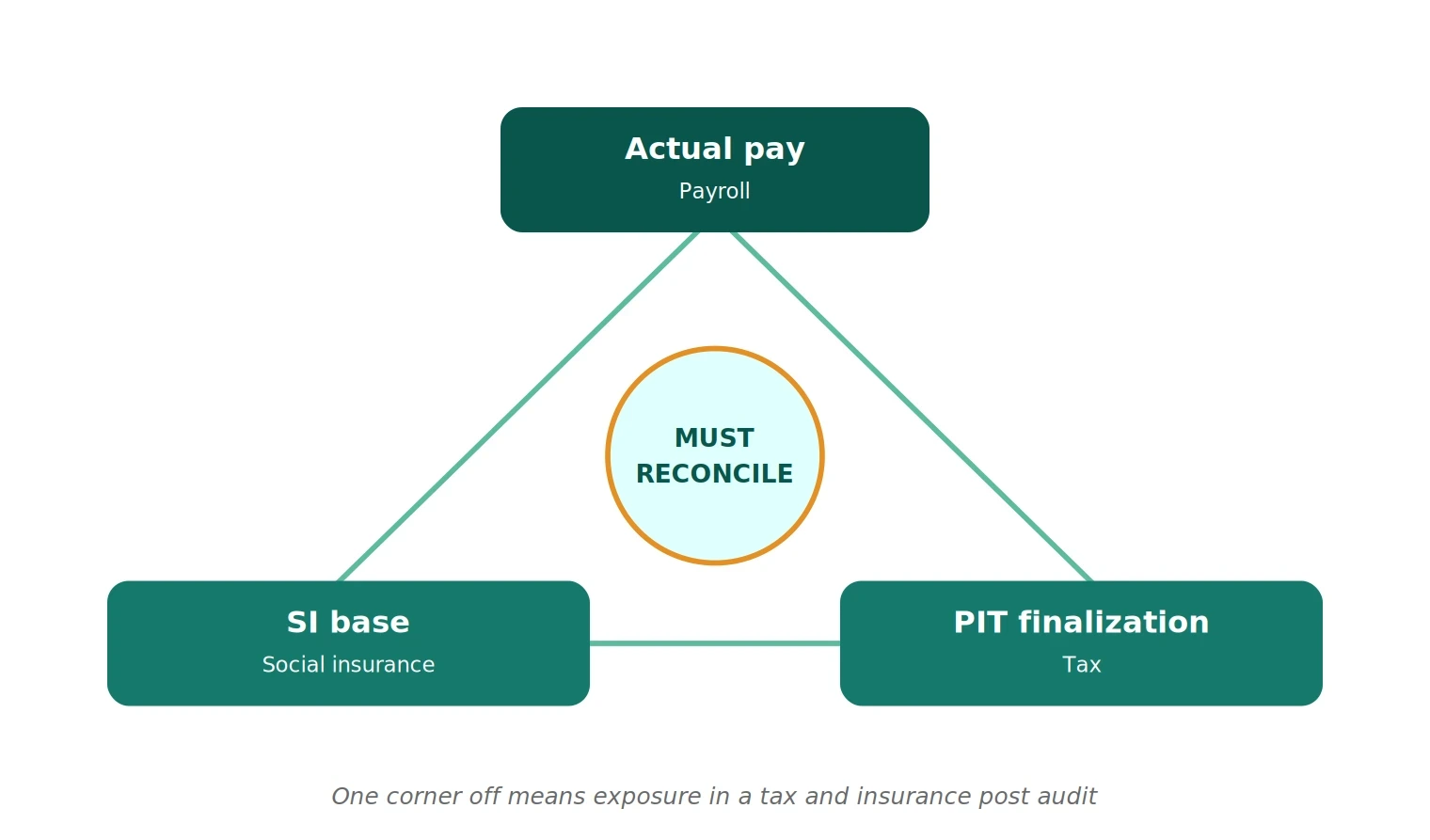
Complex salary is a challenge for trading firms. For a C&B team, payroll is not an addition problem. It is the job of keeping three numbers reconciled at all times: actual pay, the social insurance contribution base, and the personal income tax finalization figure. Let one corner of that triangle drift, and the company is immediately exposed when the tax and insurance authorities run a post audit. For a trading company with a multi layered pay structure, payroll operations get heavier still.
This is the story of a trading, import export and materials distribution company that standardized its entire payroll operation with terra. The client is anonymized under a confidentiality agreement and referred to as Company A.
About terra
terra is operated by Vina Payroll Outsourcing Co., Ltd., a member of the I-GLOCAL group (Japan) with more than 21 years of experience supporting foreign invested companies in Vietnam. terra is not just software. It is a BPaaS (Business Process as a Service) model that outsources the operational process on a technology platform, managing attendance, payroll, tax and insurance in one seamless flow.
The complex salary triangle and real payroll bottlenecks for C&B
Unlike the shift attendance challenge of manufacturing or the foreign worker angle, the bottleneck for a trading company sits in the complexity of the pay structure and the pressure of constantly shifting compliance. We split it into two perspectives because C&B and leadership carry different pressures.
The payroll data triangle: three numbers that must reconcile exactly
OPERATIONAL VIEW
Pressure on HR and C&B
Keeping actual pay, the social insurance contribution base and the PIT finalization figure reconciled, since any gap is exactly what the authorities probe in a post audit.
Classifying the legitimacy of each item in a trading company’s complex pay structure, including sales commission, KPI bonus, and fuel, phone and travel allowances for the sales team, deciding which are taxable and which count toward the insurance base.
Keeping up with a constant wave of regulatory change. 2026 alone brought a new Personal Income Tax Law, the 2024 Social Insurance Law taking effect, and updated region minimum wage and family deduction levels.
Absorbing the month end crunch, gathering attendance, reconciling and closing payroll within a few days, which is error prone when done by hand on Excel.
Handling employee questions about payslips, where one small error shakes trust and hurts the employer brand.
MANAGEMENT VIEW
Pressure on the BOD
Audit and back collection risk when the data triangle does not reconcile, a real financial and legal risk rather than an internal matter.
A blind spot on the payroll fund. With data scattered across Excel files, leadership cannot see which department overspends and cannot forecast the budget.
Continuity risk when all payroll know how sits in the head of a single C&B person, whose departure stalls the process.
The need for absolute confidentiality of salary data, especially for management and the high earning sales team.
Why the traditional approach was no longer enough
Before partnering with terra, Company A ran payroll on Excel with one C&B person doing double duty. This exposed three weaknesses.
1
Excel does not reconcile the data triangle
The operator had to match pay, the insurance declaration and the tax figure by hand, which is slow and drift prone.
2
It could not keep pace with legal change
Every time a new rule took effect, Excel formulas had to be edited by hand, and forgetting one spot meant errors across the board.
3
It depended on one person
All the logic for commission, allowances and deductions lived in one file and one person’s memory, a major continuity risk.
The result was that every pay cycle became a stress event, and every post audit was a moment the leadership had to hold its breath.
Project overview
INDUSTRY
Trading, import export and distribution of materials and products
HEADCOUNT
About 150 employees across office, warehouse and a commission based sales team
PAY STRUCTURE
Base pay, sales commission, KPI bonus and several sales allowances
STARTING POINT
Run on Excel, one C&B person, manual reconciliation of the data triangle
SCOPE
Full payroll, social insurance and PIT reconciliation, payroll fund reporting
TIMELINE
About 6 to 8 weeks
The terra solution: standardized payroll operations on one data flow
terra approached the problem by moving the whole operation onto a single data flow, where pay, insurance and tax are computed from the same source and therefore reconcile automatically. Deep expertise connects directly to PIT finalization and labor reporting services when needed.
The standardized payroll operation flow on the terra platform
The table below shows the core difference between the old way and terra’s BPaaS model.
Criteria
Excel and a double duty C&B
terra BPaaS
Reconcile pay, SI, PIT
Matched by hand, drift prone
One data source, reconciles automatically
Update when law changes
Manual formula edits
Platform and expert team update it
Complex pay structure
Tangled formulas in a file
Configured by policy, transparent
Month end crunch
Days of piled up work
Materially shortened by automation
Single person dependency
Very high
Process and data run by the terra team
Payroll fund visibility for BOD
Fragmented
Centralized reporting, ready for leadership
The 2026 context: why the pressure is higher now
2026 is a pivotal year for pay and compliance policy, which makes manual operation even riskier.
Regulation group
Effect on payroll operations
New Personal Income Tax Law (Law 109/2025/QH15)
Changes how taxable income and deductions are determined, requiring formula updates
2024 Social Insurance Law taking effect
Adjusts who participates and the contribution base, directly affecting many groups
Region minimum wage
Requires a review of the salary scale and items tied to the minimum wage
Classifying allowances and KPI bonus
Clarifies which items are taxable and count toward social insurance, with no more gray zone
This summary is general. The specific content and effective dates are configured by terra to the real situation and updated to current regulations.
Implementation roadmap: standardized in 6 to 8 weeks
1
Policy review and data standardization (2 to 3 weeks)
terra reviewed the full pay policy, commission logic, KPI bonus and allowances.
Reclassified the legitimacy of each item, clarifying what is taxable and what counts toward the insurance base.
Standardized employee data and set up the payroll configuration in the system.
2
Testing and handover (2 to 3 weeks)
Ran trial payroll on real data and reconciled against previous results to surface data triangle gaps.
Two terra teams supported in parallel, customer care for the system and the payroll research team for tax and insurance.
Trained the client HR on reading reports and the approval flow.
3
Live operation and automation (2 to 3 weeks)
Ran the official pay cycle with multi level approval, payroll calculated by terra and confirmed finally by client HR.
Automatically issued payslips and produced a centralized payroll fund report for leadership.
Periodically reconciled the three numbers, pay, social insurance and PIT, ready for any post audit.
Results after standardizing with terra
~70%
less month end payroll processing time
3 of 3
pay, SI and PIT always reconcile
~80%
fewer internal payslip queries
The data triangle is reconciled automatically each cycle, ready for any tax and insurance post audit.
Leadership has a centralized payroll fund report, seeing cost by department to forecast the budget.
The process no longer depends on one individual, so there is no continuity risk when staff change.
Payroll data is secured to the ISO/IEC 27001:2022 information security standard.
Why the terra BPaaS model convinces
terra BPaaS Payroll Solutions
1
One single data flow
Pay, insurance and tax come from the same source, so the data triangle reconciles itself and audit risk drops at the root.
2
Continuous compliance updates
The expert team tracks and applies legal changes on the company’s behalf.
3
Partnership, not a one off sale
terra operates alongside the company every cycle instead of handing over software and leaving.
4
Enterprise grade security
ISO/IEC 27001:2022 certified, ready to sign a data protection agreement and enforce access controls.
Conclusion
For a trading company, payroll operations are no longer about getting one number right. They are about keeping the whole data triangle reconciled while the law keeps changing and the pay structure grows more complex. Company A’s story shows that when the process is standardized on a platform that unifies technology and expertise, C&B escapes manual matching, and leadership rests easy on compliance, cost and continuity.
Complex salary in trading companies refers to multi-layered pay structures that include base salary, sales commissions, KPI bonuses, and various allowances such as fuel, phone, and travel allowances for the sales team. Managing these components requires careful classification to determine which items are taxable and which count toward the social insurance contribution base, making payroll operations significantly more challenging than standard salary structures.
Payroll reconciliation is critical because three numbers must be kept aligned at all times: actual pay, social insurance contribution base, and personal income tax finalization figure. If these figures drift apart, the company faces immediate exposure during tax and insurance authority audits, which can result in significant financial and legal risks including back collection demands and penalties.
The main challenges include managing complex multi-layered pay structures with commissions and allowances, keeping up with constant regulatory changes, reconciling three critical payroll figures manually, handling month-end processing within tight deadlines, and managing audit risks. Additionally, trading companies often face continuity risks when payroll knowledge depends on a single employee, and struggle with budget visibility across departments when data is scattered across Excel files.
Companies should implement a comprehensive payroll system that automates the classification and calculation of different pay components, ensuring each item is correctly identified as taxable or non-taxable and properly attributed to the insurance contribution base. Using BPaaS (Business Process as a Service) solutions like terra can help standardize the entire operation across a technology platform, reducing manual errors and ensuring compliance with evolving tax and insurance regulations.
The payroll data triangle consists of three interconnected numbers that must always reconcile: actual pay (what employees receive), the social insurance contribution base (used for insurance calculations), and the personal income tax finalization figure (used for tax compliance). Any discrepancy between these three figures can trigger audit findings and expose the company to compliance risks.
Excel-based payroll is manual, error-prone, and difficult to maintain when regulations change frequently. A professional payroll outsourcing service automatically handles regulatory updates, maintains data reconciliation across all three critical figures, provides audit trails and security for sensitive salary data, and eliminates continuity risks associated with single-person dependency. Additionally, outsourced payroll provides leadership with real-time visibility into payroll expenses by department for better budget forecasting.
Trading companies should implement a system that automatically reconciles actual pay, social insurance contributions, and tax figures in real-time, maintains detailed audit trails for all calculations, stays updated with regulatory changes, and ensures proper classification of commission, bonuses, and allowances. Working with specialized payroll providers experienced in Vietnamese compliance can help companies prevent discrepancies and prepare comprehensive documentation for audits, significantly reducing financial and legal risks.