
For businesses operating here, mastering the VAT tax refund mechanism is essential to optimizing cash flow and ensuring full regulatory compliance. This guide terra provides a comprehensive breakdown of the requirements, procedures, and latest updates for the 2025-2026 period.
Overview of VAT in Vietnam
To navigate the VAT tax refund landscape effectively, one must first master the fundamental mechanics of the Vietnamese Value Added Tax (VAT) system. VAT is a multi-stage, consumption-based tax levied on the value added at each step of the supply chain.
Understanding value added Tax (VAT) in Vietnam
In Vietnam, the vast majority of foreign-invested enterprises (FIEs) utilize the Deduction Method. This method is the cornerstone of VAT refund eligibility, as it allows businesses to offset the tax paid on purchases (Input VAT) against the tax collected on sales (Output VAT).
The fundamental formula is:
| Payable VAT = Output VAT – Deductible Input VAT |
If your Deductible Input VAT consistently exceeds your Output VAT, common in export-heavy industries or new large-scale investments, you enter the territory of a potential VAT tax refund.
Current VAT rates and exemptions (2025-2026)
As of 2026, Vietnam continues to use VAT rates as a lever for economic policy. Understanding these brackets is vital for determining how to claim VAT refund amounts accurately:
- 0% (Export Incentive): This rate is the “gold standard” for exporters. It applies to goods and services sent abroad or into non-tariff zones. Crucially, it allows businesses to claim a full VAT tax refund on all associated input costs.
- 5% (Social & Essential): Reserved for sectors the government wishes to support, including clean water, medical equipment, and agricultural inputs.
- 10% (Standard Rate): The default rate for most commercial activities, including telecommunications, electronics, and professional services.
Failure to apply the correct rate, especially the 8% vs. 10% distinction, is one of the most common hurdles in the VAT refund process, often leading to rejected applications.
Tip for 2026: Keep a close eye on the VAT Reduction Program. Historically, the government has lowered the 10% rate to 8% for specific industries to stimulate domestic demand. However, this usually excludes “high-growth” or “specialized” sectors like banking, real estate, and excisable goods.
VAT tax refund for businesses in Vietnam
Securing a VAT tax refund is no longer just an administrative task, it is a strategic financial move. However, the Vietnamese tax authorities (GDT) have intensified their scrutiny. To ensure your capital isn’t trapped in the state treasury, you must align strictly with the following VAT refund eligibility criteria and procedural steps.
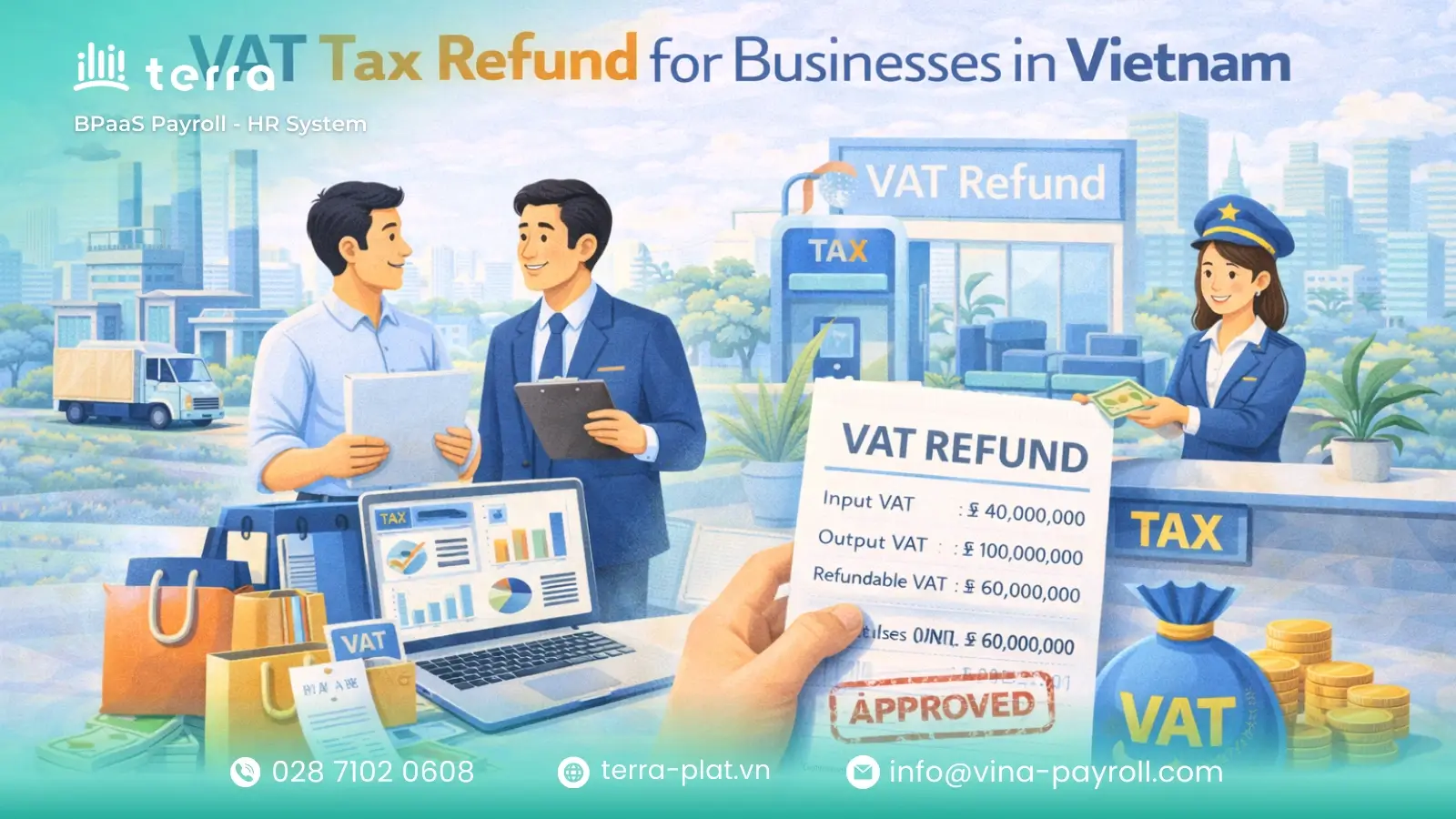
VAT refund thresholds and conditions
In 2026, eligibility is primarily defined by the 300 million VND threshold. If your deductible input VAT is below this, it must be carried forward to the next period.
- New investment projects: Businesses in the “pre-operation” investment phase can claim a refund if accumulated input VAT for the project reaches >= 300 million VND.
- Export-oriented enterprises: If your monthly or quarterly non-deducted input VAT on exported goods/services hits >= 300 million VND, you are eligible. This is a vital liquidity source for manufacturing and processing hubs.
- Structural changes: During merger, consolidation, division, or dissolution, any overpaid or non-deducted VAT can be reclaimed, provided the final tax finalization is cleared.
Note: The project must be separate from current production/business activities and properly registered.
AT refund process for businesses
The VAT refund process is now fully integrated into the e-Tax (Etax) portal, reducing human error and increasing transparency.
Preparing and submitting VAT returns
Accuracy is the difference between a 6-day refund and a 6-month audit. Your digital file must include:
- Form 01/HT: The electronic request for refund.
- E-Invoice reconciliation: A detailed list of electronic invoices (under Decree 123/2020/ND-CP) that match the GDT’s central database.
- Proof of non-cash payment: Bank credit notes for all transactions >= 20 million VND.
Application procedure and submission channels
The law distinguishes between two tracks based on the taxpayer’s compliance history:
- Refund first, audit later: Reserved for “Rank A” taxpayers. Processing time is 06 working days.
- Audit first, refund later: Mandatory for first-time claimants, high-risk sectors, or those with previous tax violations. Processing time can extend to 40 working days.
Timeline for VAT tax refund processing
Even with valid VAT refund eligibility, minor technicalities can lead to a rejection:
- The “20 million rule”: Any invoice over 20 million VND paid in cash is strictly ineligible for a refund.
- E-Invoice discrepancies: If your supplier hasn’t “uploaded” their side of the invoice to the tax portal, your claim will be flagged as “inconsistent.”
- Contract mismatches: Differences between the value on the commercial contract, the customs declaration, and the final invoice.
- Invoice “suspicion”: Using invoices from suppliers who are currently on the “high risk” or “inactive” lists published by the Tax department.
Common mistakes to avoid in VAT tax refund applications
Identifying VAT refund eligibility is only half the battle; maintaining a “clean” dossier is the other. Even a minor clerical error can move your application from the “6-day refund” track to a “40-day intensive audit.”
The “Big Data” mismatch: Inconsistent records
In the era of digital tax management, your internal accounting ledgers must be a mirror image of your VAT declarations.
- The error: Discrepancies between the revenue reported on Corporate Income Tax (CIT) returns and the turnover on VAT returns.
- The consequence: The system automatically flags “hidden revenue” or “inflated expenses,” triggering a manual inspection of all physical books.
Violating the “non-cash” rule
This is the most rigid rule in Vietnamese tax law. Under Circular 173/2016/TT-BTC and subsequent updates, cash is king only for small amounts.
- The error: Paying any invoice with a total value (including VAT) of 20 million VND or more via cash or a personal bank account.
- The requirement: Payments must be made via Bank-to-Bank transfer from the buyer’s registered account to the seller’s registered account.
- The penalty: The entire input VAT for that invoice is disqualified from the VAT refund process, regardless of the transaction’s legitimacy.
E-Invoice technical non-compliance
With Decree 123 and Circular 78 now fully matured, paper invoices are obsolete. However, digital errors are the new “invalid invoices.”
- The error: Using e-invoices that lack the mandatory “Tax Authority Code” (for businesses in high-risk zones) or having incorrect descriptions of goods/services that don’t match the company’s registered Business Lines.
- The pro-tip: Always verify the status of your supplier on the GDT portal. If a supplier is listed as “Temporarily Inactive” or “Vanished from Business Address,” any VAT from their invoices will be rejected.
Discrepancies in export documentation
For those looking at how to claim VAT refund on exports, the “Paper Trail” must be flawless across three different government agencies:
- The error: Mismatches between the Customs Declaration, the Commercial Invoice, and the International Payment Proof.
- The standard: The quantity and value of goods must be identical across all three documents. Any variation, even due to currency exchange fluctuations or shipping losses, must be documented with an official “Adjustment Note.”
Corporate tax context related to VAT tax refund
In Vietnam, taxes do not operate in silos. A VAT tax refund application is often the catalyst for a broader tax audit. Understanding how VAT interacts with Corporate and Personal Income Tax is essential for holistic financial compliance.
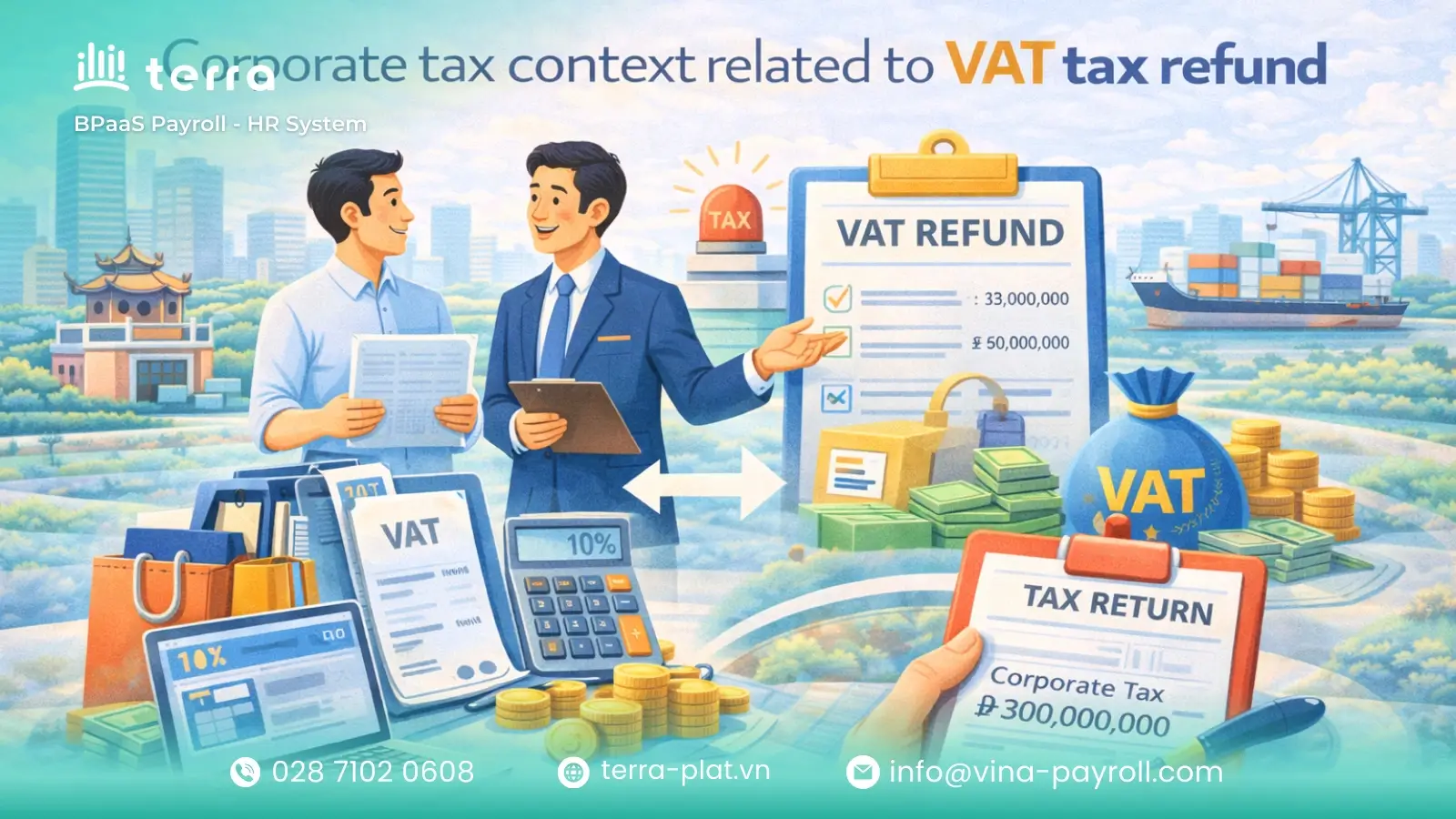
Corporate income tax and VAT interaction
The relationship between Corporate Income Tax (CIT) and VAT is governed by the principle of “Legitimate Documentation.” Under the CIT Law 2025 (Law No. 67/2025/QH15), the requirements for deductible expenses have been strictly synchronized with VAT invoice standards.
- The link: If an input invoice is rejected during the VAT refund process, perhaps due to a cash payment violation or an “inactive” status of the supplier, it is automatically disqualified as a deductible expense for CIT.
- The impact: This creates a double financial hit: You lose the 8%-10% VAT credit and simultaneously face a 20% CIT increase on that same amount because it is treated as non-deductible profit.
Personal income tax considerations
Starting in 2026, Vietnam has significantly overhauled the tax regime for individual business households to ensure fairness with corporate entities.
- New revenue threshold: The tax-exempt threshold for business households has been raised to 500 million VND/year (up from the previous 100 million VND).
- The “Income-based” shift: Households with high revenue (typically above 500 million VND) may now opt for (or be required to use) an income-based tax method at a 15% rate, similar to SMEs.
- Refund eligibility: Despite these reforms, business households still generally pay VAT via the “Direct Method” (a flat % of revenue) and remain ineligible for the standard VAT tax refund reserved for companies using the “Deduction Method.”
Tax incentives related to VAT tax refund
Vietnam’s “Green Taxonomy” (Decision 21/2025/QD-TTg) now serves as a “passport” for expedited tax processing. To improve VAT refund eligibility and speed, the government offers specific fast-track incentives:
- Priority sectors: Projects in Semiconductors, AI Data Centers, and Renewable Energy are automatically categorized as “Low Risk.”
- Processing privilege: These sectors qualify for the “Refund First, Audit Later” track, guaranteeing a decision within 06 working days.
- CIT holidays: These projects often enjoy a 10% preferential CIT rate for 15 years, coupled with a “4-year exemption and 9-year reduction” (4-9-15 rule), creating a high-incentive environment for reinvesting VAT refunds into expansion.
How to apply for a VAT tax refund in Vietnam
Navigating the VAT refund process requires more than just filling out forms; it demands a robust digital infrastructure. To ensure your application moves through the system without friction, follow this three-pillar strategy updated for 2026 compliance.
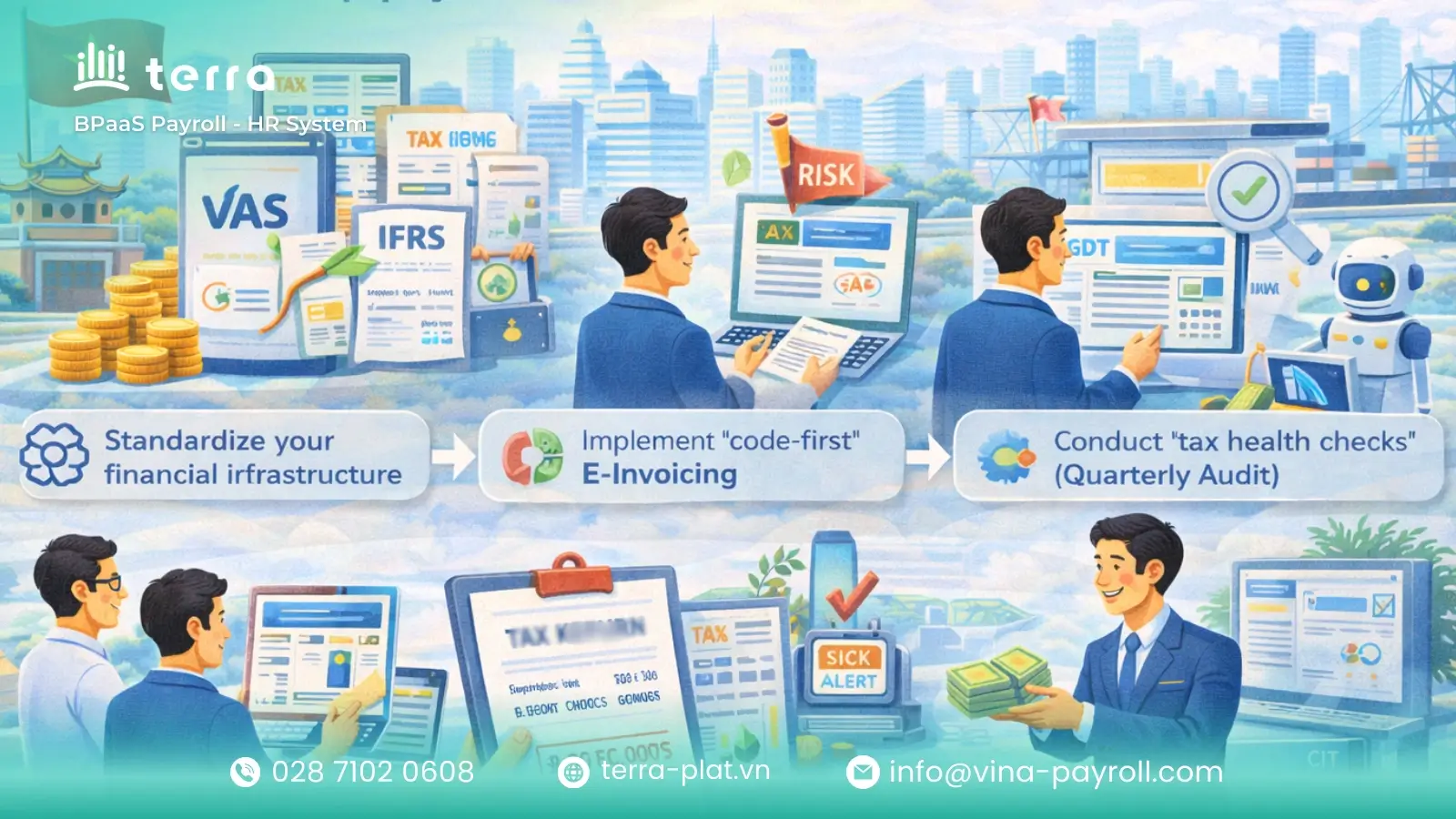
Standardize your financial infrastructure
Your accounting system is the foundation of your VAT tax refund success. In Vietnam, transparency is synonymous with compliance.
- VAS vs. IFRS adoption: Ensure your accounting software is fully compliant with the Vietnamese Accounting Standards (VAS) (Circular 200) or the IFRS roadmap if you are a foreign-invested enterprise.
- System reconciliation: Your software must be able to automatically reconcile your internal books with the General Department of Taxation’s (GDT) database. Discrepancies here are the #1 reason for VAT refund eligibility delays.
Implement “code-first” E-Invoicing
Under Decree 123 and Circular 78, the validity of an invoice is determined by its digital footprint.
- Invoices with tax authority codes: To expedite how to claim VAT refund, strictly use e-invoices that have been granted a code by the tax authority. These are “pre-verified” and significantly reduce the audit time.
- Real-time verification: Regularly use the GDT’s electronic portal to check the “Active” status of your suppliers. If a supplier is flagged for “Risk,” your input VAT will be immediately frozen.
Conduct “tax health checks” (quarterly audit)
Don’t wait for a government audit to find your mistakes. Proactive auditing is the hallmark of a high-compliance taxpayer.
- Identify “dead VAT”: Quarterly checks help you spot invoices that lack bank transfer proofs or have clerical errors while you still have time to request “Adjustment Invoices” from suppliers.
- Scrubbing the data: Verify that your “Output VAT” reported to the government matches the revenue recognized in your CIT filings. In 2026, AI-driven cross-checking by the tax office makes this alignment mandatory for VAT refund eligibility.
Frequently asked questions about VAT tax refund
Here are frequently asked questions about VAT tax refund:
Can you claim tax back in Vietnam?
Yes. Vietnam offers two primary avenues for reclaiming Value Added Tax:
- For businesses: Entities operating under the “deduction method” can reclaim input VAT if it exceeds their output VAT by 300 million VND or more (typically for exporters or new investors).
- For foreigners: Non-resident travelers can claim a 85% refund on the VAT paid for eligible goods purchased at registered “VAT Refund” shops. The remaining 15% is typically retained as a service fee by the refunding bank.
How can I claim a VAT tax refund?
The process depends on your status. In 2026, the VAT refund process is almost entirely digitized:
- For businesses: You must submit Form 01/HT via the National e-Tax Portal. Under the new 2026 regulations, you are no longer penalized if your seller has not yet remitted their tax, this significantly speeds up approval for compliant buyers.
- For tourists:
1. Purchase goods worth at least 2 million VND (on a single invoice) at a shop displaying the “VAT Refund” logo.
2. Obtain the VAT Refund Declaration from the retailer.
3. Present your passport, unused goods, and the declaration at the Customs Inspection counter at major international hubs (Noi Bai, Tan Son Nhut, Da Nang, or Cam Ranh) before your flight.
Is it worth getting a VAT tax refund?
Absolutely. In a high-inflation environment, liquidity is vital. For exporters, a VAT tax refund effectively recovers a 10% (or 8%) margin on their costs, which directly bolsters the project’s Internal Rate of Return (IRR).
For tourists, reclaiming VAT on luxury items or high-end electronics provides substantial savings, especially since the 2026 process at airports has been streamlined to take less than 20 minutes for pre-verified digital invoices.
How to avoid VAT issues legally?
To stay compliant with the General Department of Taxation (GDT) and avoid audits, follow these “Safe Harbor” practices:
- Verify your vendors: Use the GDT portal to ensure your supplier is “Active” and not a “shell company.”
- The 20 million rule: Never pay an invoice >= 20 million VND in cash. Payments must be Bank-to-Bank to be eligible for any refund.
- E-Invoice matching: Ensure the “Description of Goods” on your e-invoice matches your registered business lines. Discrepancies here are a primary trigger for “Audit First, Refund Later” classifications.
Investing and doing business in Vietnam 2026: VAT considerations
Entering the Vietnamese market in 2026 requires a shift in mindset: tax compliance is no longer a “back-office” function; it is a core digital strategy. The General Department of Taxation (GDT) has fully transitioned to a real-time, data-driven governance model, fundamentally changing the VAT refund process for international enterprises.
The rise of AI-powered tax surveillance
By 2026, the GDT’s AI systems will analyze the entire “purchase-sale” chain across the nation in milliseconds. Under the Law on Tax Administration 2025, the authorities use Big Data to:
- Trace intermediary chains: AI identifies “redundant trading practices” where goods pass through multiple shell companies to inflate input VAT.
- Flag abnormalities: Instant alerts are triggered if your supplier’s tax profile shows “abnormal” revenue spikes compared to their registered labor scale or warehouse capacity.
- Automate risk scoring: Your VAT refund eligibility is now determined by an automated compliance score, which dictates whether you fall into the “6-day refund” or “40-day audit” track.
The death of “phantom invoices”
In previous years, investors faced significant risks from “runaway” suppliers. In 2026, the Digital Compliance framework (strengthened by Decree 70/2025/ND-CP) makes phantom invoices easier to detect and avoid.
- Real-time validation: E-invoices must be digitally signed and transmitted to the GDT within 24 hours. This eliminates the possibility of backdating or falsifying records.
- Protective legislation: Under Law No. 149/2025/QH15, a landmark shift ensures that a buyer’s VAT tax refund is no longer held hostage by a seller’s failure to remit tax, provided the buyer can prove a legitimate non-cash transaction.
Digital compliance: Your 2026 competitive advantage
For foreign investors, “impeccable records” are no longer just about avoiding fines, they are about liquidity.
- Speed to market: High-compliance “Rank A” taxpayers enjoy automated VAT tax refunds, ensuring that millions of dollars in capital are returned to the business within a week.
- M&A readiness: In the 2026 investment landscape, a “Clean Tax Health Check” is a prerequisite for any successful merger, acquisition, or exit strategy.
Final summary: VAT compliance checklist for 2026
| Priority area | Requirement | Strategic benefit |
| E-Invoicing | Must use Tax authority codes (Decree 123/70) | Instant legitimacy and audit reduction |
| Payments | Strictly non-cash for all invoices >= 20 million VND | Guaranteed VAT refund eligibility |
| Data Sync | Automated reconciliation between ERP and Etax portal | Elimination of manual “clerical error” flags |
PIT finalization services in Vietnam
Navigating Personal Income Tax (PIT) finalization in Vietnam is a critical annual compliance requirement for both local employees and expatriates. These services provide comprehensive support in aggregating annual income, calculating exact tax liabilities, and filing returns to ensure full legal compliance while mitigating the risk of administrative penalties.
Core scope of PIT support
Professional tax services in Vietnam cover the entire spectrum of income sources, including:
- Income aggregation: Consolidating salaries, wages, performance bonuses, and taxable benefits-in-kind.
- Expatriate specialization: Specialized assistance for foreign workers, focusing on tax residency determination, obtaining tax deduction certificates, and managing finalization procedures prior to exiting the country.
- Digital filing excellence: Guidance in registering personal electronic tax accounts and navigating the Vietnam e-Tax Portal for seamless online submissions.
- Official representation: Acting as the authorized liaison to explain tax returns and handle direct inspections or queries from the General Department of Taxation.
Strategic tax optimization & compliance
A key value of hiring a professional service is the optimization of tax refunds and deductions. Under the current 2026 regulatory framework, services ensure you maximize available reliefs:
- Personal deduction: VND 15.5 million per month.
- Dependent deduction: VND 6.2 million per month per dependent.
- Refund management: Streamlining the often-complex process of reclaiming overpaid tax from the state budget.
Critical filing deadlines to remember
Failure to meet these windows can lead to significant interest charges and penalties:
- Annual finalization: Generally due by the end of the fourth month of the following year (April 30) for individuals filing directly, or March 31 for enterprises.
- Exiting Vietnam: Must be completed within 45 days prior to the date of departure.
Trusted PIT service providers
While the market features several reputable firms such as Viet An Law (legal focus), Golden Star (licensed tax agents), and esos (expat-centric), businesses looking for a modern, tech-driven approach often turn to specialized platforms.
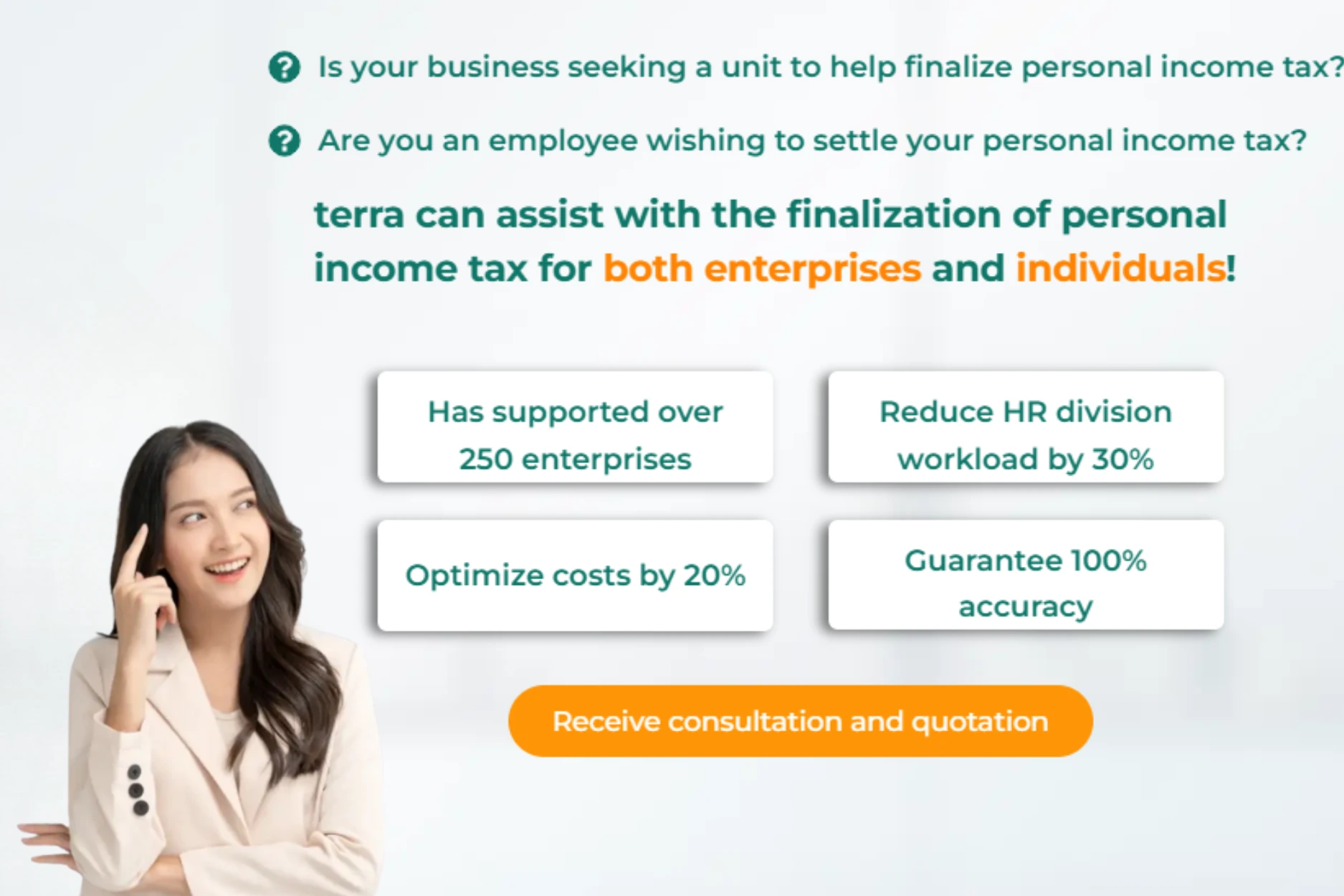
With a proven track record serving over 250 companies across Japan, New Zealand, Singapore, and other countries, terra is a trusted provider of professional HR and compliance services. We offer a comprehensive suite including terra payroll, labor reporting, PIT services, social insurance, and payroll disbursement, helping organizations maintain full legal compliance while focusing on growth.
Benefits of using terra’s PIT finalization service:
- Reduce up to 30% of HR & tax-related workload.
- Optimize operating costs by up to 20%.
- Ensure 100% accuracy and minimize tax errors.
- Full compliance with Vietnam’s legal regulations.
terra’s commitments:
- Compliant, risk-free tax finalization.
- Real-time policy and regulation updates.
- Absolute client data confidentiality.
- Prompt support and issue resolution.
Let terra be your partner in navigating tax and finance with clarity, confidence, and professionalism.
Conclusion
The VAT tax refund landscape in Vietnam has evolved into a sophisticated, digital-first system. While the scrutiny has increased, so has the transparency. By mastering the VAT refund process and maintaining a proactive stance, businesses can transform tax management from a regulatory burden into a significant cash-flow advantage in 2026.









