
Nowadays, finding and hiring the right talent is more challenging than ever. Manual processes using spreadsheets and email are slow, and prone to costly errors. In this post, terra will explain what recruitment software is, explore its key features and benefits, and compare top solutions to help you build a winning team.
What is recruitment software?
Before investing in a new tool, it’s crucial to understand what it does. Recruitment software has evolved from simple databases into sophisticated systems that manage the entire hiring lifecycle. Let’s define the term and explore its main categories.
Recruitment software definition
At its core, recruitment software is a tool designed to automate and streamline a company’s hiring and recruiting processes. It acts as a central hub for finding, attracting, evaluating, interviewing, and onboarding new employees, often integrating seamlessly with a corporate LMS to support post-hire training and development.
This technology, also known as recruiting management software, helps HR teams and hiring managers save time, manage large volumes of applications, and make better, data-driven hiring decisions.
Types of recruitment software
The term recruitment software is broad and can include several specialized tools. While many modern platforms combine features, it’s helpful to understand the primary categories and their core purpose.
- Applicant Tracking System (ATS): This is the most common type and acts as the reactive heart of recruiting, designed to efficiently manage active candidates who have applied for a job. Its main purpose is to create efficiency by collecting all applications into one central pipeline (from “Applied” to “Hired”).
- Candidate Relationship Management (CRM) Software: This is a proactive tool focused on managing your potential candidate pipeline, or talent pool. Its purpose is to build and nurture relationships with people before they even apply.
- Integrated Talent Acquisition Suites: These are modern, all-in-one platforms that combine the reactive workflow of an ATS with the proactive nurturing of a CRM. This creates a continuous experience from recruitment to learning, performance tracking, and career development throughout the probation period.

Features of modern recruiting software
Today’s top recruiting platforms go far beyond simply collecting resumes. They offer a suite of powerful features designed to make hiring faster, smarter, and more collaborative.
Applicant tracking
This is the fundamental feature. An Applicant Tracking System (ATS) provides a clear visual pipeline (e.g., Applied, Screening, Interview, Offer) to track every candidate’s status.
For example: Instead of tracking 50 applicants in a chaotic spreadsheet, an HR professional can instantly see: 10 in Screening, 5 in Hiring Manager Review, and 2 in Offer Stage. You can drag-and-drop a candidate to the next stage, and the system can automatically send them a status update email.
AI-powered candidate matching
This powerful feature uses Artificial Intelligence to automatically scan, parse, and score thousands of resumes in seconds. It matches candidate skills and experience against the job description.
For example: A single job post that receives 200+ resumes, the AI can score and present a Top 10 Most Qualified list in minutes. This feature alone can save an HR team 5-10 hours of manual screening work per position.
Integrated communication tools
Modern systems integrate directly with your email (like Gmail/Outlook) and calendars. This allows recruiters to send automated rejection emails, schedule interviews with hiring managers, and communicate with candidates without ever leaving the platform.
Every interaction is automatically logged in the candidate’s profile, ensuring a complete and transparent communication history for the entire hiring team.
Reporting & analytics
This feature provides crucial, actionable insights. Dashboards can show key metrics like time-to-hire, cost-per-hire and source-of-hire.
For example: You can definitively see that LinkedIn provided 50% of your engineering hires or your time-to-hire for sales roles is 45 days. This data is essential for optimizing your recruitment budget and strategy based on evidence, not just a gut feeling.
Mobile access & cloud storage
As a form of online recruitment software, most modern solutions are cloud-based. This allows hiring managers who are traveling or away from their desks to access candidate profiles, watch video interviews, and provide feedback from their mobile devices.
This speeds up the process, prevents bottlenecks, and ensures all candidate data is stored securely and in compliance with data privacy regulations.

Benefits of using recruitment software
Implementing a dedicated recruitment platform offers a clear return on investment. The benefits extend beyond the HR department, impacting the candidate experience and the company’s bottom line.
Save time for HR
This isn’t just about convenience; it’s about reallocating strategic resources. By automating repetitive tasks like posting jobs, sending rejection emails, and scheduling interviews, a good system can save an HR team 8-10 hours per week.
Now, you can now spend on high-value initiatives like sourcing passive talent or building a strong employer branding strategy.
Improve candidate experience
A slow, confusing damages your brand. Good software creates a seamless, professional journey. It provides a simple, mobile-friendly application and sends automatic confirmation and status update emails. This respectful communication loop is a key part of the overall employee experience, starting even before day one.
Manage and measure recruitment effectiveness
You cannot fix what you cannot measure. Analytics moves you from gut feeling to data-driven strategy. You can definitively see that LinkedIn provides 50% of your engineering hires, your cost-per-hire is $1,500, or your time-to-hire for sales roles is 45 days. This data is essential for optimizing your budget and proving HR’s ROI to leadership.
Reduce costs from bad hires
A bad hire can cost 1.5-2x their annual salary in lost productivity, team disruption, and re-training costs. By using structured interview scorecards and objective AI-driven screening, software reduces hiring bias and inconsistency. This improves your ‘quality of hire’ and provides the single best defense against the high cost of making the wrong decision.
Support compliance
Manually managing applicant data is a major legal risk. How long must you legally keep a resume? Did you get consent to store it? Good software automates this. It provides a compliant application process, tracks candidate consent, and can automatically purge old data according to privacy laws (like GDPR), protecting your business from hefty fines.

How to choose the right recruitment platform
With hundreds of options on the market, selecting the right recruitment platform can be daunting. The key is to focus on your specific needs, not just the longest feature list.
Identify business needs
Start by mapping your current hiring process and identifying the biggest pain points. Are you drowning in resumes? Is scheduling interviews a nightmare? How many people need to use the system? Define your must-have features versus nice-to-have features before you start looking at vendors.
Evaluate features & integrations
Does the software integrate with your existing tools? A good HR recruitment software should connect seamlessly with your company’s email, calendar, and, most importantly, your core HRIS or payroll system. This avoids redundant data entry and creates a single source of truth for all employee information.
User experience
If the software is clunky and difficult to use, your hiring managers will refuse to adopt it, and you’ll be back to managing everything via email. Look for a clean, intuitive interface. Involve your hiring managers in the demo process to get their feedback before making a final decision.
Security & compliance
Ask potential vendors hard questions about their security protocols. Where is your candidate data stored? Are they compliant with local labor and data privacy laws? A security breach involving applicant data can be catastrophic for your company’s reputation and legal standing.

Popular recruitment software used by companies
The market for recruiting software is diverse, with solutions ranging from simple job boards to enterprise-level talent acquisition suites. Here are nine popular examples.
Workday
- Advantage: Workday’s power is its unified data model. Candidate data seamlessly becomes employee data, flowing directly into the core payroll, finance, and performance modules without any re-entry.
- Target: This is built for large, global enterprises (like Fortune 500s) that need a single, all-in-one system for HR and finance and prioritize data consistency above all else.
- Disadvantage: It is very expensive and complex. Its recruiting module is often considered less agile and feature-rich than best-in-class standalone recruiting platforms.

SmartRecruiters
- Advantage: SmartRecruiters excels at scalability and providing a premium, mobile-first candidate experience. It’s a true Talent Acquisition Suite built to manage high-volume, global hiring.
- Target: This platform is ideal for large, multinational corporations that have complex hiring workflows and a strong focus on protecting their global employer branding.
- Disadvantage: Its extensive feature set can be complex and time-consuming to implement. It is generally too powerful and expensive for small or mid-sized businesses.

Greenhouse
- Advantage: Greenhouse is renowned for championing “structured hiring.” It helps teams reduce bias by creating consistent interview kits and scorecards for every role, focusing on data-driven decisions.
- Target: It’s a favorite for fast-growing, mid-sized companies (especially in tech) that want to build a fair, repeatable, and scalable hiring process.
- Disadvantage: This structured approach can sometimes feel rigid for teams that prefer more flexibility. Its reporting and CRM features are generally considered less powerful than some competitors.
Lever
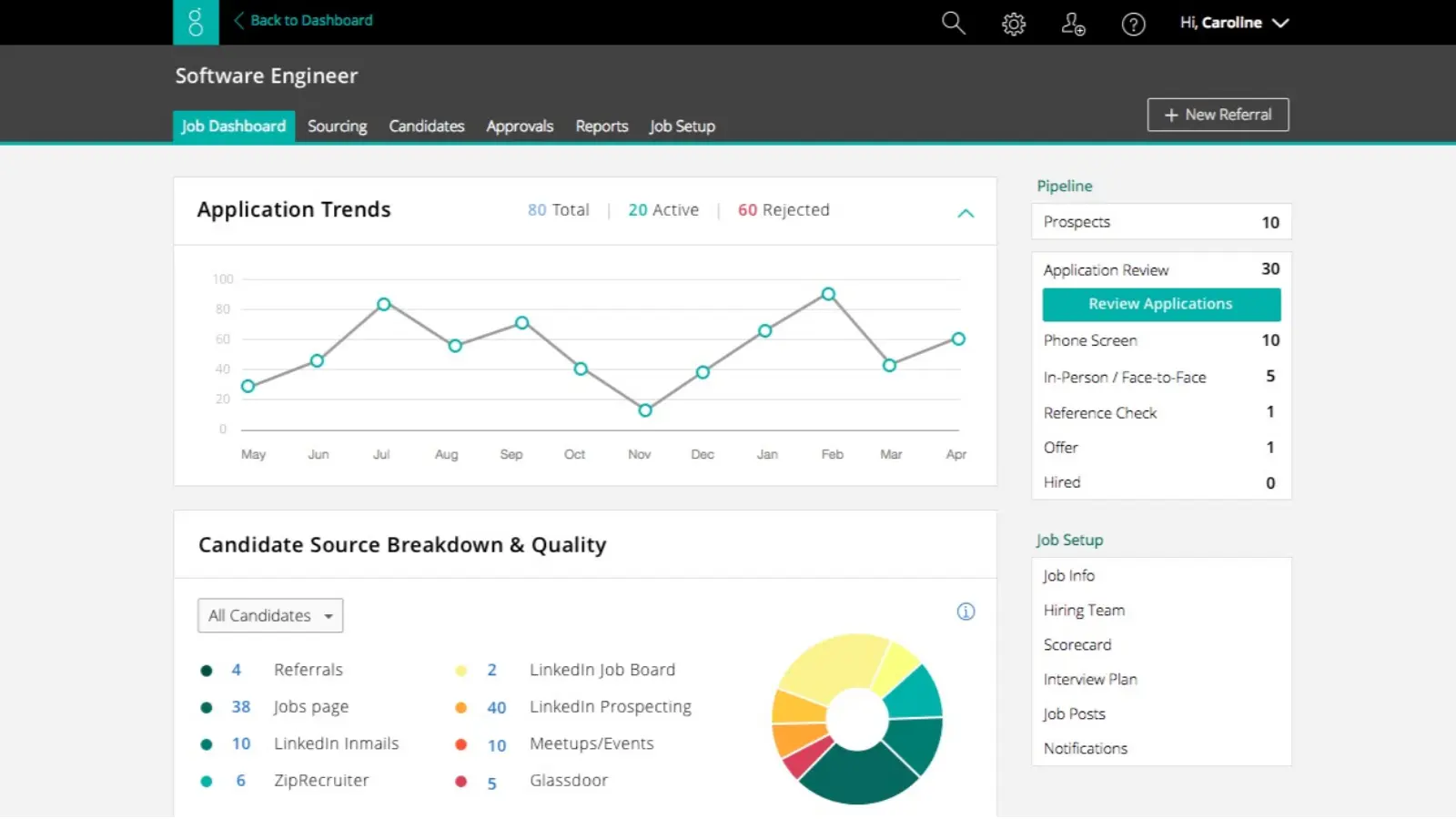
- Advantage: Lever’s unique strength is its combined ATS and CRM functionality. It makes it easy to “nurture” passive candidates and build a long-term talent pipeline, not just process active applicants.
- Target: Ideal for companies in competitive industries (like tech) that rely heavily on sourcing and building relationships with candidates who aren’t actively looking.
- Disadvantage: Its focus on nurturing means its workflow is less structured than Greenhouse, which some teams may find disorganized. The all-in-one dashboard can be overwhelming.

iCIMS
- Advantage: iCIMS is a workhorse for high-volume enterprise recruiting. It is incredibly robust and can be heavily customized to fit complex, specific hiring workflows across different departments and countries.
- Target: It’s a top choice for industries like retail, healthcare, and logistics that must process tens of thousands of applications annually and require deep integration capabilities.
- Disadvantage: The platform is known for having a steeper learning curve and a less modern user interface compared to newer suites. Implementation can be a long and complex process.

LinkedIn Talent Solutions
- Advantage: Its power isn’t in tracking applicants, but in finding them. LinkedIn Recruiter provides unmatched access to a massive network of passive professionals with powerful search filters.
- Target: This is an essential sourcing tool for almost all corporate recruiters who need to hunt for specific, high-level talent that is not actively applying for jobs.
- Disadvantage: It is not a full Applicant Tracking System. It’s an expensive sourcing add-on that you must use with your primary recruiting platform to manage the application workflow.

Indeed
- Advantage: Indeed’s primary advantage is its sheer volume as the world’s #1 job site. It’s simple to post a job and sponsor it to get in front of millions of active job seekers very quickly.
- Target: This platform is best for high-volume, high-turnover roles (e.g., service, support, logistics) and for small businesses that need an affordable, all-in-one posting and tracking solution.
- Disadvantage: The focus on quantity over quality means recruiters often face a high volume of unqualified applicants. It is not effective for sourcing high-level, passive candidates.

ZipRecruiter
- Advantage: ZipRecruiter’s core strength is speed and distribution. Its one-click technology posts your job to 100+ other job boards instantly and its AI actively invites qualified people to apply.
- Target: This is ideal for small to mid-sized businesses that lack a large recruiting team and need to fill a role as fast as possible with minimal effort.
- Disadvantage: You have less control over where your jobs appear. The invite to apply feature can also become costly as you pay for more candidates to be pushed to your role.

BambooHR (with ATS module)
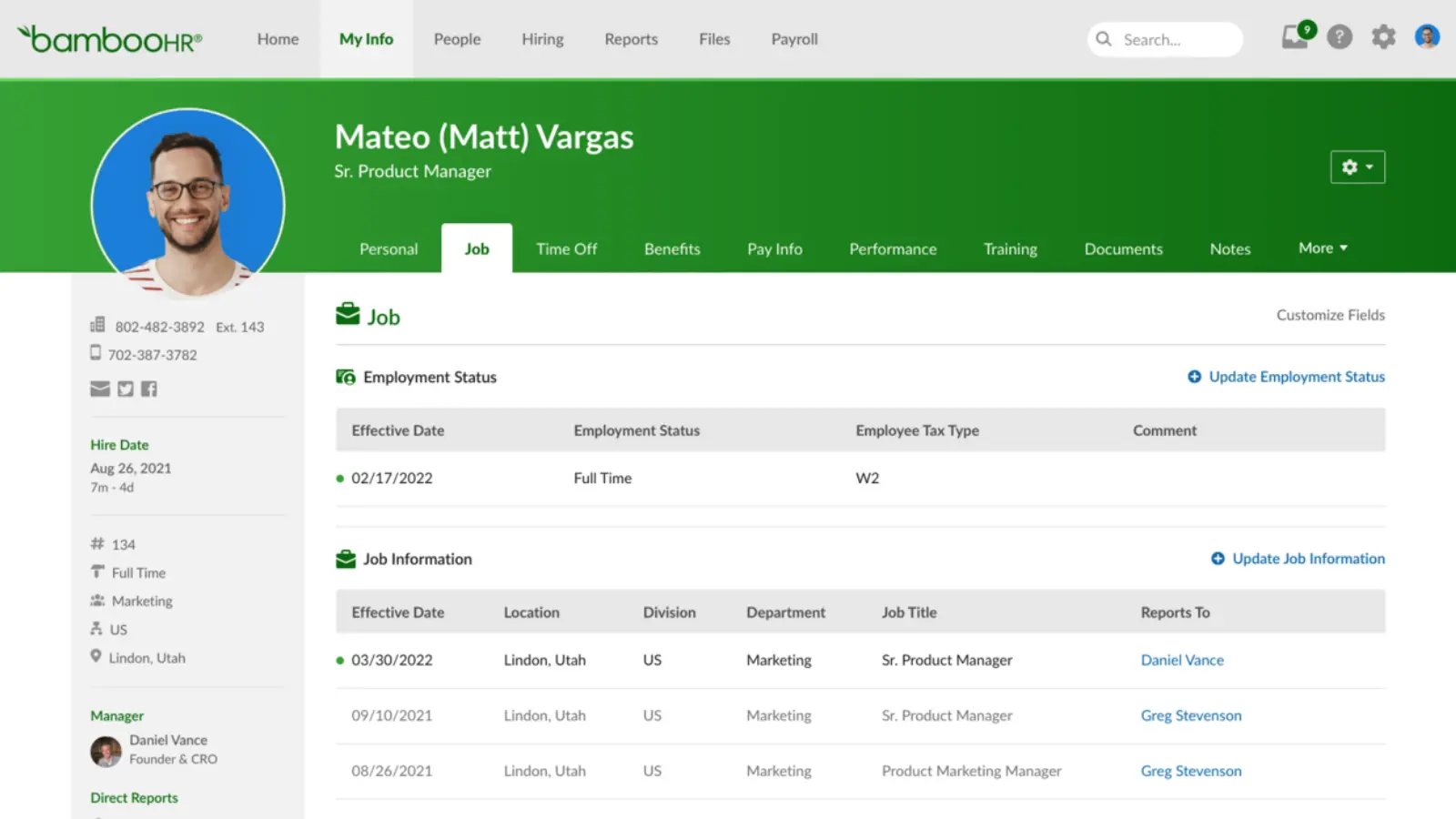
- Advantage: The primary benefit here is integration. For existing BambooHR users, the ATS module is the most convenient option, as hired candidates flow directly into the core HRIS.
- Target: This is the best recruiting software choice for small to mid-sized businesses that prioritize having one simple, unified platform for all HR functions, including a seamless onboarding process.
- Disadvantage: The ATS module itself is very basic. It lacks the advanced sourcing, analytics, and automation features of standalone platforms like Greenhouse or Lever.
Common challenges in recruitment and how hiring software helps
Many HR teams face the same recurring challenges. Modern hiring software is specifically designed to address these pain points directly.
Overwhelming resume volume
A popular job posting can attract hundreds of applications, many of which are unqualified. Hiring software with AI parsing and knockout questions (e.g., Do you have 3 years of experience?) instantly filters out unqualified applicants. This allows recruiters to focus on the candidates who are actually a good fit.
Long time-to-hire
Delays in the hiring process are frustrating and often cause top candidates to accept other offers. This software speeds things up by automating interview scheduling, sending automatic reminders to hiring managers for feedback, and moving candidates through the pipeline with a few clicks.
Candidate drop-off
A clunky application form that takes 30 minutes to fill out will cause qualified, passive candidates to abandon the process. Modern platforms offer one-click applications with LinkedIn or a simple resume upload. They also maintain communication with automated status update emails, keeping candidates engaged.
Lack of recruitment insights
Many managers make hiring decisions based on good feeling. Recruiting software provides hard data. By tracking which job boards deliver the best candidates or where bottlenecks are in your process, you can optimize your strategy and budget based on evidence, not intuition.

Frequently asked questions about recruitment software
Investing in a new system brings up many questions. Here are detailed answers to the most common queries about HR recruiting software.
Can recruitment software filter out the wrong candidates?
Answer: Yes, this is one of its primary functions.
Through AI resume parsing and pre-screening knockout questions, the software can automatically filter applications based on essential criteria you set, such as years of experience, specific certifications, or location. This ensures your team only reviews relevant candidates.
What if a candidate exaggerates their CV but still passes the software screening?
Answer: The software is a filter, not a final decision-maker.
The software is designed to find keywords and qualifications, not to verify their authenticity. This is why the human element – structured interviews, background checks, and reference checks – remains a critical part of the process. The software’s job is to get you to the interview stage faster.
Can recruitment software reduce bias in hiring?
Answer: Yes, it can significantly help reduce unconscious bias.
Many platforms offer features like anonymized screening, which hides candidate names, photos, and other demographic information. By forcing evaluators to focus purely on skills and experience, the software helps promote a more objective and fair hiring process.
How much does recruitment software cost?
Answer: The cost varies dramatically, from free to thousands of dollars per month.
Pricing is typically based on the number of employees, the number of active job postings, or the number of users (recruiters). Simple systems for small businesses may cost a few hundred dollars a month, while enterprise-level suites are a significant annual investment.
Are there any free recruitment software options?
Answer: Yes, many platforms offer freemium plans.
Tools like Indeed or even some ATS platforms offer free plans that are suitable for very small businesses with minimal hiring. However, these plans are usually limited in features, the number of users, or the number of active jobs you can post.
Is recruitment software suitable for small businesses?
Answer: Absolutely. In fact, it’s often more critical for small teams.
Small business owners or HR managers wear many hats. A good recruitment platform automates the administrative burden of hiring, saving them valuable time that can be spent on growing the business. Many vendors specifically target the SMB market.
What is the best recruitment software for small businesses?
Answer: The best recruiting software for an SMB is often one that is part of a unified HRIS.
Instead of buying a standalone ATS, a small business gets more value from an all-in-one system like a comprehensive terra hr solution. This ensures that once a candidate is hired, their data automatically transfers to payroll and employee records without any re-entry.
Can I access recruitment software on mobile?
Answer: Yes, most modern, cloud-based systems are mobile-friendly.
This is a key feature. It allows hiring managers who are traveling or away from their desks to quickly review resumes and provide feedback, which helps prevent bottlenecks and speeds up the entire hr recruiting software-driven process.

terra HR System – Comprehensive HR solution
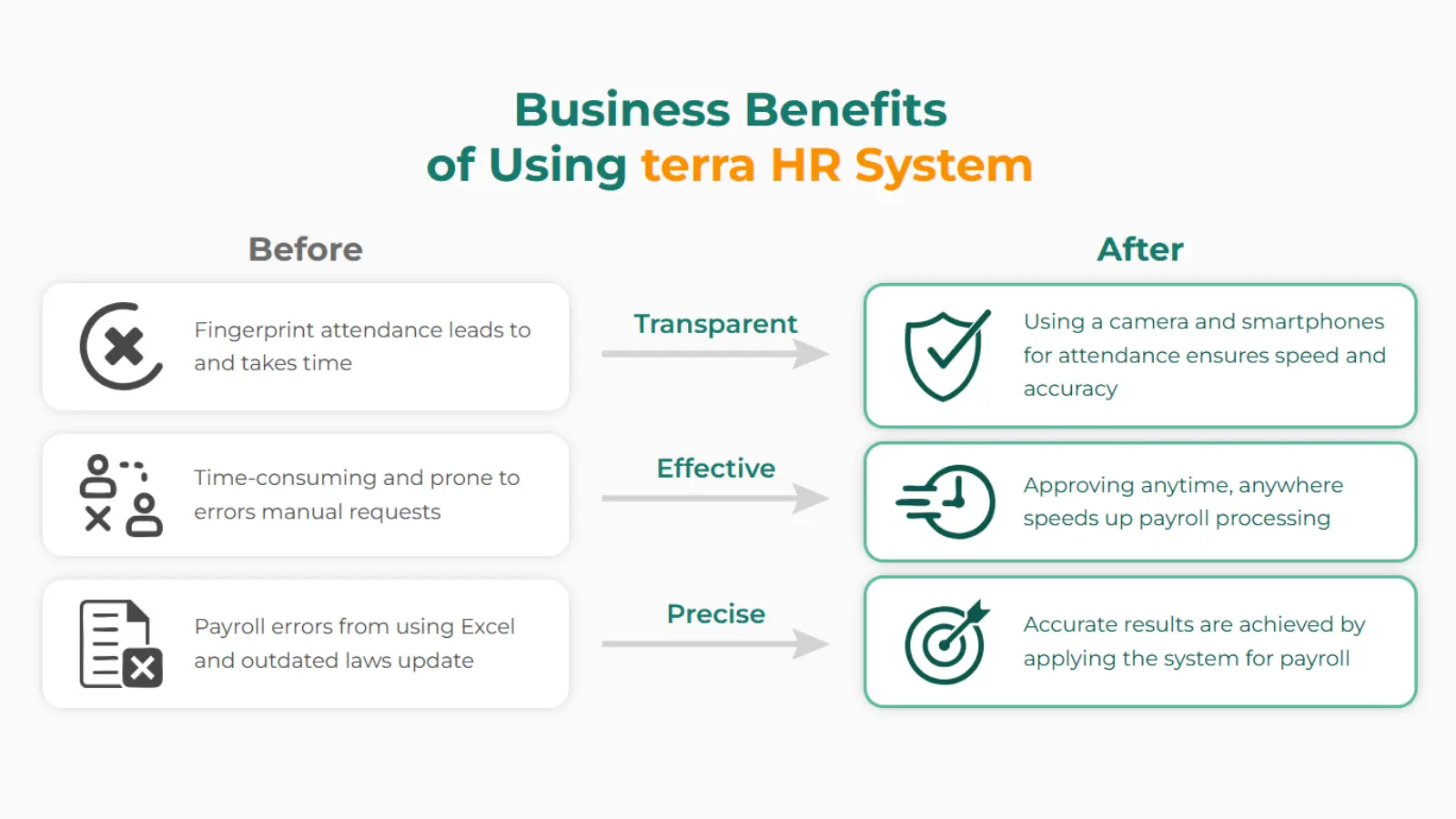
While specialized recruitment software is excellent for talent acquisition, many businesses find greater value in a unified system. terra HR Management System is a comprehensive solution that integrates recruitment directly into the core HR workflow.
This all-in-one terra HR Solution provides a single hub for all employee data, so when you hire a candidate, their profile automatically transfers to payroll and management, eliminating errors and creating a seamless onboarding process.
- Core HR Management: This is the central heart of the terra HR Platform. It securely stores and manages all employee profiles, contracts, and insurance details, eliminating paperwork and providing instant, centralized access to all critical records.
- Automated Payroll Management: This module automates complex calculations for salary, Personal Income Tax (PIT), and social insurance, ensuring 100% compliance with Vietnamese regulations. It links directly to timekeeping data to generate accurate, individual payslips for every employee.
- Time & Attendance Management: Effectively track working hours, overtime, and diverse leave policies. This feature integrates with time clocks and allows employees to request time off, giving managers a clear, real-time view of attendance data.
- Streamlined Recruitment (ATS): Manage your entire hiring pipeline, from posting jobs to tracking candidates and generating offer letters. This module within the terra HR Software ensures candidate data is captured once and used for their entire employee lifecycle.
- Performance & Goal Management: Set, track, and evaluate employee performance against clear objectives. This tool supports regular reviews and helps you make informed, data-driven decisions on promotions, employee training, and contract renewals.
Contact terra now for detailed advice!
Conclusion
In conclusion, recruitment software has evolved from a simple database into an essential strategic tool for modern business. Choosing the right recruiting software is a key investment in your company’s future growth and success.









