Today, time and attendance software helps businesses monitor working hours, manage shifts, and ensure payroll accuracy with just a few clicks. Whether you’re handling a hybrid team or a growing workforce, adopting the right system can save time, prevent errors, and improve overall productivity.
What is time and attendance software?

Understanding how businesses manage their workforce efficiently starts with time and attendance software. This technology plays a central role in helping companies monitor employee productivity, reduce administrative workload, and maintain compliance. Let’s take a closer look at what it is and the main types available today.
Time and attendance software definition
Employee time and attendance software, also known as employee time tracking software, is a digital solution that enables organizations to monitor working hours, manage employee shifts, and track attendance automatically. It replaces traditional paper timesheets with digital time tracking tools, ensuring precise data collection, transparency, and adherence to labor regulations.
In the era of flexible and remote work, these systems have become indispensable. They capture real-time attendance data, allowing HR and payroll teams to save time, reduce manual errors, and focus on strategic initiatives such as recruitment recruitment process, employment contract management, and employee engagement.
Before choosing a system, it’s important to understand that each business has unique operational needs. That’s why time and attendance solutions come in various forms, each designed to meet different levels of complexity and scalability.
Common types of time and attendance software
Here are the primary categories of attendance management systems used by businesses today:
- Biometric systems: Use fingerprint or facial recognition to confirm employee identity and prevent time fraud, such as “buddy punching.”
- Mobile or app-based systems: Ideal for on-site, field, or remote employees, these tools allow workers to clock in and out directly through their smartphones.
- Cloud-based vs. on-premise software: Cloud-based solutions offer flexibility, scalability, and real-time access from anywhere, while on-premise systems provide stronger data control and advanced customization options.
- Integrated vs. standalone systems: Integrated platforms connect seamlessly with HR and payroll software, ensuring consistent and efficient data flow. Standalone tools, on the other hand, offer simplicity and cost-effectiveness for smaller teams.
Time and attendance software features
Modern platforms now integrate automation, analytics, and mobility to help businesses streamline daily operations while maintaining compliance. Below are the most important features of time & attendance software that every organization should consider.
Automated clock-in/ clock-out
Automation is at the heart of any effective employee time tracking system. By automatically recording employees’ working hours, it eliminates manual data entry errors and prevents time theft.
Each timestamp is logged precisely, ensuring accurate payroll calculations. Managers can instantly access attendance records, reducing disputes over missed punches or incorrect overtime entries.

Biometric and mobile tracking
To enhance accuracy and security, modern attendance tracking tools incorporate biometric verification and GPS-enabled mobile apps. Employees can use time clock software in using facial recognition, fingerprints, or location-based check-ins, ensuring real-time and tamper-proof data.
This feature is especially beneficial for remote, hybrid, or field-based teams that require flexible attendance tracking.
Scheduling and shift management
Managing multiple shifts or rotating schedules can be challenging without automation. Time and attendance management systems simplify this process by allowing managers to easily create, adjust, and assign shifts.
Employees can also view their schedules, request changes, or swap shifts directly from mobile devices. This not only improves flexibility but also reduces scheduling conflicts and absenteeism.

Leave and overtime management
Manual tracking of leave and overtime often leads to errors and payroll inconsistencies. With automated attendance and leave management features, the system calculates overtime pay, manages leave balances, and enforces compliance with labor laws. This ensures fairness, accuracy, and transparency across the organization’s workforce policies.
Reporting & analytics
Comprehensive reporting and analytics are essential for strategic HR decision-making. Advanced dashboards provide insights into employee attendance patterns, absenteeism rates, and overtime costs.
These analytics empower HR teams to identify trends, optimize workforce allocation, and enhance overall productivity. Data-driven insights also support better planning and cost management.
Challenges in attendance management

While automated tools have improved accuracy and efficiency, several persistent challenges continue to affect how companies track and manage working hours effectively. Understanding these attendance management challenges is key to building a more reliable and transparent system.
- Manual attendance tracking errors: Relying on paper-based timesheets or spreadsheets often results in inaccurate or incomplete data. Small mistakes, like incorrect entries or missing timestamps, can accumulate, leading to payroll discrepancies and reduced trust between employees and HR teams.
- Buddy punching and fraud: Traditional attendance systems are vulnerable to unethical practices such as “buddy punching,” where one employee clocks in for another. These forms of time fraud not only distort payroll accuracy but also impact team accountability and overall productivity.
- Managing remote/hybrid teams: With teams now spread across locations and time zones, tracking attendance consistently has become more challenging. Remote work requires flexible yet secure attendance solutions that can verify employee activity without micromanagement or privacy concerns.
- Overtime calculation errors: Inaccurate tracking of overtime hours can lead to payroll disputes, compliance violations, and employee dissatisfaction. Automating this process through a reliable time and attendance system ensures both transparency and fairness.
- Reporting and compliance difficulties: Different regions have varying labor laws governing working hours, breaks, and overtime. Manually staying compliant is time-consuming and prone to oversight. Modern attendance management software helps organizations maintain accurate records and automatically adhere to these legal requirements.
Benefits of using time and attendance software

Adopting a reliable time and attendance software not only streamlines daily HR operations but also creates a foundation for long-term organizational success. Below are the key benefits of integrating a time and attendance systems into your business operations:
- Save time for HR and payroll teams: Automation replaces manual data entry and paper-based timesheets, allowing HR and payroll staff to process attendance and salaries faster. This frees up valuable time to focus on strategic tasks such as recruitment, employee training, and employee retention.
- Reduce attendance errors and buddy punching: Biometric authentication and GPS-based tracking ensure every clock-in and clock-out is genuine. This eliminates “buddy punching” and minimizes attendance discrepancies, creating a fair and transparent workplace.
- Improve workforce productivity: With real-time attendance data, managers gain a clear overview of team availability and workload distribution. This insight helps them allocate tasks efficiently, reduce idle time, and improve overall performance.
- Maintain compliance with labor laws: Automated attendance systems help organizations stay compliant with local labor laws by tracking work hours, breaks, and overtime accurately. This ensures audit readiness and minimizes legal risks related to wage or hour violations.
- Provide real-time attendance insights: Comprehensive dashboards provide instant access to attendance trends, absenteeism rates, and labor costs. These analytics empower HR teams to make data-driven decisions that enhance productivity and cost efficiency.
Popular time and attendance software used by companies
Choosing the right time and attendance software can significantly improve how businesses manage their workforce, streamline payroll, and maintain compliance. Below are some of the most reputable solutions adopted by companies worldwide.
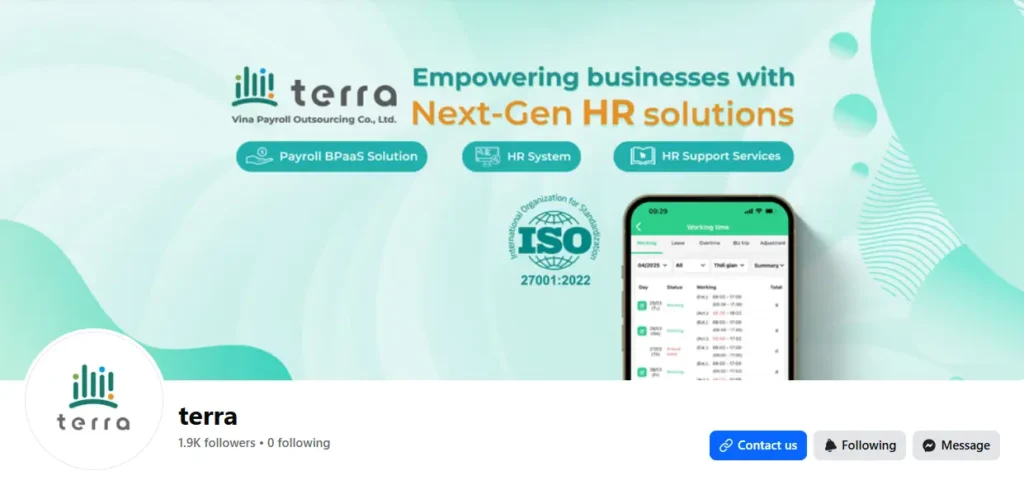
terra HR System

The HR System at terra is a modern human resource management platform trusted by more than 100 businesses across various industries. Built on a cloud-based infrastructure, the system integrates all HR functions into a single unified platform.
From employee record management, synchronized attendance data, automated payroll calculation and delivery, to benefits administration and contract management, every process is handled seamlessly by terra HR software. Businesses can access terra HR platform anytime, anywhere, ensuring real-time data updates and enhanced operational efficiency.
Why choose the terra HR System?
- User-friendly interface available in English, Japanese, and Vietnamese.
- Suitable even for teams with no prior experience using terra HR management software.
- Enhances administrative efficiency, minimizes errors, and saves time.
- Consolidates all HR tasks on a single platform, easily accessible via both desktop and mobile devices.
Let terra HR solution accompany your organization in streamlining HR management, so your team can focus on achieving strategic goals instead of being burdened by administrative processes.
Kronos (UKG)

Kronos, now part of UKG (Ultimate Kronos Group), is well-known for its AI-powered scheduling and compliance management features. The platform offers predictive workforce analytics that help employers optimize labor costs and improve shift efficiency. Designed for large-scale operations, Kronos ensures accuracy, fairness, and flexibility in workforce planning.
ADP Workforce Now

ADP Workforce Now is a comprehensive HR suite built for mid-sized to enterprise-level businesses. It integrates payroll, attendance, and benefits administration under one secure system. Its automated compliance tracking and detailed reporting make it a top choice for companies managing complex workforces across multiple regions.
Deputy

Deputy is widely recognized for its powerful scheduling and mobile attendance capabilities. With features like shift swapping, real-time notifications, and geofencing, it simplifies workforce management for retail, hospitality, and service industries. The platform’s ability to export data directly to payroll saves time and minimizes administrative errors.
TSheets / QuickBooks Time
QuickBooks Time, previously known as TSheets, is a favorite among small businesses looking for simplicity and integration. It combines real-time time tracking with payroll synchronization, ensuring accurate payments and clear attendance records. Its mobile-friendly app makes it easy for remote employees to log their hours from anywhere.
BambooHR (attendance module)

BambooHR offers a lightweight yet efficient attendance module as part of its all-in-one HR system. It helps companies track time-off requests, manage employee attendance, and monitor engagement, all within an easy-to-use interface. Ideal for small to mid-sized teams, BambooHR supports both operational needs and employee experience.
Zoho People

Zoho People is a cloud-based HR software that includes built-in time tracking, leave management, and analytics dashboards. Its flexibility makes it suitable for businesses that require scalability without high costs. With automation features and integrations across the Zoho ecosystem, it’s an efficient solution for fast-growing companies.
Replicon

Replicon provides a highly customizable platform designed for large enterprises and project-based organizations. Its advanced time intelligence system captures real-time data for attendance, billing, and resource allocation. This helps businesses improve productivity, transparency, and compliance across global operations.
Time Doctor

Time Doctor is one of the most popular tools for remote and distributed teams. It offers detailed productivity analytics, live attendance tracking, and optional screenshot monitoring to ensure accountability. The platform supports time zone synchronization, making it ideal for managing international teams efficiently.
Paycor

Paycor combines HR management, payroll processing, and time tracking in a unified interface. Its mobile app allows employees to view schedules, request time off, and check attendance on the go. With built-in compliance tracking and reporting tools, Paycor helps businesses operate efficiently in hybrid work environments.
SAP SuccessFactors (attendance module)

SAP SuccessFactors delivers enterprise-grade HR solutions with an integrated attendance tracking module. It provides real-time insights into employee performance, time utilization, and labor costs. Trusted by global corporations, this platform supports scalability, compliance, and strategic workforce management across multinational operations.
Summary table
Here’s a quick summary to help you evaluate the leading time and attendance software in 2025:
| Software | Best for | Key features | Integration |
| terra HR System | Small to mid-size firms | Time tracking, Payroll, HRIS | Cloud-based |
| Kronos (UKG) | Enterprise | AI scheduling, Compliance | SAP, Workday |
| ADP Workforce Now | Global workforce | Payroll + Attendance | 150+ Integrations |
| Deputy | Shift-based teams | Mobile clock-in, Geofencing | Gusto, QuickBooks |
| QuickBooks Time | Small businesses | GPS Tracking, Timesheets | QuickBooks Payroll |
| BambooHR | HR & Attendance | Leave & Attendance | Slack, Gusto |
| Zoho People | Growing Teams | Attendance, HR automation | Zoho Suite |
| Replicon | Large Enterprises | Project-based tracking | Salesforce, SAP |
| Time Doctor | Remote Teams | Productivity analytics | Asana, Trello |
| Paycor | Payroll Automation | Compliance & Scheduling | QuickBooks |
| SAP SuccessFactors | Multinational Firms | Time & Payroll Integration | SAP HCM |
Things to consider when choosing time and attendance software

Selecting the right time and attendance software is more than just comparing prices or features, it’s about finding a system that aligns with your workforce structure, business goals, and compliance requirements. Before making your final decision, take a closer look at these key factors that can determine the success of your implementation.
Assessing workforce complexity
Every organization has unique workforce dynamics, from small teams working fixed shifts to global enterprises managing hybrid schedules across multiple time zones. Understanding your workforce size, scheduling needs, and remote work policies helps you identify whether you need a simple attendance tracker or an advanced, multi-location solution.
Evaluating feature needs
Not all software solutions are built the same. While some prioritize biometric authentication and automated payroll integration, others focus on analytics or mobile accessibility.
Define which features matter most to your business, for example, GPS-based time tracking may be crucial for field teams, while analytics dashboards can benefit HR leaders monitoring productivity trends.
User-friendliness
An overly complex system can slow down adoption and create frustration among employees. Look for a user-friendly platform with a clear interface, simple navigation, and mobile compatibility. The goal is to reduce onboarding time and ensure every team member can clock in, review schedules, or submit leave requests effortlessly.
Data security
With increasing privacy concerns, data protection should be non-negotiable. The ideal time and attendance system must comply with GDPR and local labor regulations, encrypt sensitive data, and secure biometric or payroll records. Choosing a vendor that prioritizes cybersecurity safeguards both your employees and your organization’s reputation.
Frequently asked questions about time and attendance software

Before choosing a time and attendance system, many businesses share similar questions about accuracy, compatibility, pricing, and usability. Below are some of the most common FAQs that can help you understand how these tools work and decide which solution best fits your organization’s needs.
How accurate is biometric vs mobile tracking?
Biometric tracking offers the highest level of accuracy by identifying employees through unique physical characteristics such as fingerprints or facial recognition. Mobile tracking, on the other hand, provides greater flexibility, especially for remote or field-based teams. For distributed workforces, GPS-enabled mobile tracking strikes a perfect balance between precision and convenience.
Can time and attendance software integrate with payroll systems?
Yes, most modern platforms seamlessly integrate with payroll solutions to automate wage calculations. Popular systems such as ADP, BambooHR, and Zoho People connect directly to payroll modules, reducing manual input and minimizing human error while ensuring compliance and accuracy.
Is time and attendance software suitable for small businesses?
Definitely. Many cloud-based systems, like QuickBooks Time and Deputy, offer affordable subscription plans tailored for small and growing businesses. These scalable solutions allow smaller teams to enjoy enterprise-grade accuracy and efficiency without high setup or maintenance costs.
How does it support hybrid or remote workforce management?
With features like GPS tracking, facial recognition, and real-time attendance monitoring, these systems provide complete visibility into employee work patterns regardless of location. This ensures both transparency and accountability for teams working from the office, home, or on the go.
How much does it cost on average?
Pricing typically starts between $2 and $10 per user per month for entry-level plans. Enterprise-grade systems like SAP or ADP usually provide customized pricing based on features, integration scope, and company size.
Can the software handle complex shift schedules and overtime calculation?
Yes. Advanced tools such as Kronos (UKG), Deputy, and Paycor are built to manage intricate schedules across multiple locations. They automatically track and calculate overtime according to pre-configured labor policies, ensuring compliance with labor regulations.
What is the best time and attendance software?
The ideal solution depends on your organization’s size, structure, and specific requirements. For large enterprises, Kronos (UKG) is a top choice thanks to its analytics and automation capabilities. Deputy works best for shift-heavy operations, while QuickBooks Time is perfect for small businesses seeking a simple, reliable option.
Conclusion
In today’s digital era, time and attendance software is essential for efficient HR operations. It automates attendance tracking, ensures compliance, and improves productivity. Choosing the right system helps your business streamline workflows, enhance transparency, and grow with confidence.