
In 2026, salary alone cannot retain top talent. Low satisfaction leads to costly turnover. terra explores key drivers of employee satisfaction and how trusted payroll solutions build a loyal, high-performing workforce.
Why employee satisfaction is important for modern organizations
Employee satisfaction represents the psychological contract between the staff and the organization. When this contract is breached, the P&L (Profit and Loss) statement suffers immediately.
Employee satisfaction as a business performance indicator
Think of satisfaction as a leading indicator. While financial reports tell you what happened in the past, satisfaction scores predict the future. A sustained drop in internal satisfaction almost always precedes a decline in Customer Satisfaction Scores (CSAT) and revenue, usually with a 3-6 month lag time.
The cost of low satisfaction: turnover, disengagement, productivity loss
The direct link between employee satisfaction and retention is undeniable. The financial impact of dissatisfaction is measurable and brutal: Turnover Costs:
- Turnover Costs: According to SHRM (Society for Human Resource Management), replacing a mid-level employee costs 100% to 150% of their annual salary. This includes recruitment fees, onboarding costs, and the ramp-up time for new hires to reach full productivity.
- Quiet Quitting: Disengaged employees do the bare minimum. Gallup data suggests that disengaged employees cost the global economy trillions in lost productivity. They are physically present but mentally checked out, dragging down team velocity.
Why satisfaction matters beyond short-term retention
In the age of radical transparency (Glassdoor, LinkedIn), your employee satisfaction score is your Employer Brand. A company known for burning out its people will have to pay a significant wage premium (often 10-20% above market rates) just to attract talent.

What drives employee satisfaction in the workplace
What makes a person stay? It is rarely just one factor. Frederick Herzberg’s Two-Factor Theory remains relevant in 2026: you need Hygiene Factors (to prevent dissatisfaction) and Motivators (to drive satisfaction).
Fair compensation and perceived equity
Money is a hygiene factor. If you pay too little, people are unhappy. However, paying highly does not guarantee engagement.
The Key: Perceived Equity. Employees compare their effort and reward not just with the market, but with their colleagues. Payroll errors or opaque bonus structures destroy this perception instantly.
Opportunities for growth and career development
Top talent fears stagnation more than overwork. If they cannot see a future at your company, they will build one outside it. A robust retention strategy must include lateral moves, upskilling, and mentorship programs.
Work-life balance and flexibility
The definition of work life balance has evolved. It is no longer just about leaving at 5 PM; it is about autonomy. Employees want the power to design their workflow around their life, ensuring they can deliver results without sacrificing personal well-being.
Recognition and rewards
Recognition must be timely. A Thank You delivered three months later during a quarterly review loses its impact. Digital recognition platforms that allow for immediate, peer-to-peer acknowledgment are becoming the standard in high-performance cultures.
Leadership trust and management style
People leave managers, not companies. A leadership style based on micromanagement kills satisfaction. Modern leaders must act as Servant Leaders removing blockers and clearing the path for their teams to succeed.
Workplace culture and psychological safety
Do your employees feel safe to admit a mistake? Psychological safety is the bedrock of innovation. Without it, teams hide errors, leading to larger strategic failures down the line.
Below is a summary matrix outlining these core drivers and the actionable strategies leaders must implement to foster a highly satisfied workforce:
| Satisfaction Driver | Core Concept & Actionable Strategy |
| Fair compensation and perceived equity | Money acts as a hygiene factor. Ensure perceived equity by maintaining transparent bonus structures and eliminating payroll errors. |
| Opportunities for growth and career development | Prevent talent stagnation by providing clear paths for lateral moves, upskilling, and mentorship programs. |
| Work-life balance and flexibility | Shift focus to autonomy, allowing employees the power to design their workflow around their personal well-being. |
| Recognition and rewards | Ensure acknowledgment is timely and impactful by utilizing digital platforms for immediate, peer-to-peer recognition. |
| Leadership trust and management style | Transition from micromanagement to “Servant Leadership,” focusing on removing blockers for the team. |
| Workplace culture and psychological safety | Build a foundation for innovation by creating a safe environment where employees can admit mistakes without fear. |

Employee satisfaction in the AI-driven workplace
By 2026, AI is ubiquitous in business operations. This introduces a new variable to the satisfaction equation: AI Anxiety.
Changing employee expectations in the AI era
Employees now expect their internal tools to be as intuitive as consumer apps. If your internal systems are clunky, manual, and slow, it signals to employees that the organization does not value their time.
Automation as an enabler, not a replacement
To increase employee satisfaction, leaders must frame AI correctly. It should automate robotic tasks (data entry, scheduling) so humans can focus on human work (strategy, empathy, complex problem-solving).
Data-driven performance tracking and trust concerns
With advanced analytics, companies can track everything. However, surveillance kills satisfaction. The goal should be monitoring outcomes, not mouse clicks. Trust is the currency of the hybrid workplace.
Balancing efficiency with human experience
Efficiency shouldn’t come at the cost of empathy. Algorithms can track performance, but they cannot understand context. A dip in productivity might mean a personal crisis, not laziness. Leaders must keep the human in the loop.
How to measure employee satisfaction effectively
You cannot manage what you do not measure. However, long, exhaustive annual surveys often suffer from survey fatigue.
Employee satisfaction surveys
Employee satisfaction surveys While useful for deep dives, these should be concise. Using a streamlined employee satisfaction survey form ensures higher completion rates. Ensure anonymity to encourage honest feedback regarding sensitive topics like management and compensation.
Pulse surveys and continuous feedback loops
Instead of one massive survey per year, use weekly or monthly Pulse Checks (3-5 questions). This allows HR to catch burnout trends in real-time before they turn into resignation letters.
Employee Net Promoter Score (eNPS)
This is the gold standard for a quick sentiment check.
- The Question: On a scale of 0-10, how likely are you to recommend our company as a place to work?
- The Formula: eNPS = % Promoters (9-10) – % Detractors (0-6).
- The Benchmark: A score above +30 is considered good; above +50 is excellent.
Employee Satisfaction Index (ESI)
A more nuanced metric that combines satisfaction with the job, the employer, and the workplace environment into a weighted score.
Focus groups and one-on-one conversations
Data tells you what is happening; conversations tell you why. Regular Stay Interviews (asking high performers why they stay) are often more valuable than Exit Interviews.
10+ tips to improve employee satisfaction in 2026
Today’s workforce is sophisticated; they value structural support over superficial perks. To truly reduce turnover and boost morale, leaders must implement systemic changes.
Clarify expectations and role responsibilities
Ambiguity is the silent killer of satisfaction. According to Gallup, nearly 50% of employees do not know what is expected of them at work. When roles are ill-defined, employees waste energy guessing rather than executing.
Action: Move beyond static Job Descriptions. Implement Dynamic Role Charters that are reviewed quarterly. Explicitly define what success looks like using OKRs (Objectives and Key Results) to eliminate the anxiety of the unknown.
Promote work-life balance consistently
Balance is often a slogan, not a practice. If leadership praises employees for working late, the culture will inevitably drift toward burnout.
Action: Enforce a Right to Disconnect policy. actively discourage after-hours emailing. Leaders must model this behavior leaving on time and taking full vacations to signal that rest is a performance requirement, not a luxury.
Offer flexibility with clear structure
Unlimited flexibility can paradoxically cause stress due to a lack of boundaries. Employees need autonomy, but they also need predictability.
Action: Implement Core Hours (e.g., 10:00 AM – 3:00 PM) where collaboration happens, leaving the rest of the day for deep, asynchronous work. This hybrid work model offers the best of both worlds: community connection and individual freedom.
Recognize contributions regularly and meaningfully
The dopamine hit from recognition fades quickly. A yearly bonus does not sustain motivation for 12 months.
Action: Shift to Micro-Recognition. Use digital platforms to allow peer-to-peer shout-outs in real-time. Crucially, connect the recognition to specific behaviors (e.g., Thank you for streamlining the reporting process) rather than generic praise (e.g., Good job), reinforcing the value of their specific contribution.
Encourage open communication and feedback
A silent organization is a dangerous one. When employees feel they cannot speak up, they vote with their feet.
Action: Build Psychological Safety. Leaders should regularly ask, What is one thing I am doing that slows you down? Create channels where bad news can travel up the hierarchy faster than good news, ensuring problems are solved, not hidden.
Invest in learning and development
In 2026, the half-life of a learned skill is only 5 years. Employees view upskilling as a survival mechanism.
Action: Democratize learning. Instead of selecting a few for leadership training, provide a Learning Stipend or subscription to platforms like Coursera/LinkedIn Learning for all. Show them a clear internal career path so they visualize their future with you, not after you.
Support mental health proactively
Mental health support has moved from an employee assistance program hidden in a handbook to a front-line management responsibility.
Action: Train managers to spot early signs of burnout (withdrawal, irritability). Institutionalize Mental Health Days that are separate from sick leave, normalizing the need for mental recovery just as we do for physical recovery.
Redesign workflows to reduce friction
High performers quit when they spend more time fighting internal bureaucracy than doing their actual job.
Action: Conduct a Friction Audit. Ask teams to identify the top 3 processes that waste their time (e.g., complex expense reports, excessive approval layers). Systematically dismantle these barriers. A smooth workflow is a major driver of daily satisfaction.
Leverage automation to remove repetitive work
Nobody went to college to copy-paste data from a PDF to Excel. Drudgery kills engagement.
Action: Aggressively deploy AI tools for low-value tasks. Position automation not as a way to cut headcount, but as a way to promote employees to higher-value, more creative work.
Outsource high-pressure administrative tasks
Internal HR and Finance teams often face massive stress during payroll cycles, fearing legal errors or tax penalties.
Action: Partner with payroll outsourcing services like terra. By offloading the high-risk burden of compliance and calculation, you protect your internal team’s mental bandwidth and ensure the entire workforce gets paid accurately on time a fundamental pillar of trust.
Align performance evaluation with realistic goals
Stretch goals can inspire, but impossible goals demoralize. Chronic failure to hit unrealistic targets leads to Learned Helplessness.
Action: Set goals using historical data and capacity planning. Ensure that performance reviews account for external factors (like market shifts) so employees feel judged on their effort and adaptability, not just raw numbers.
Use technology to support, not control, employees
The rise of bossware (surveillance software) has deeply damaged trust in remote settings.
Action: Audit your tech stack. Remove tools that simply monitor presence (keystroke loggers). Invest in tools that enable asynchronous collaboration (like Notion, Slack, Asana). Trust is a currency; spending it on surveillance buys you nothing but resentment.
Building a sustainable employee satisfaction strategy
Improving satisfaction isn’t a one-time project with a deadline; it is an ongoing operating system. Companies fail when they treat it as a yearly checklist rather than weaving employee experience into the daily fabric of business decisions.
Aligning people strategy with business goals
HR initiatives often fail because they are disconnected from commercial reality. A ping-pong table does not help a sales team missing targets; better CRM tools do.
Strategy: Map every people initiative to a business outcome.
For example: We are improving work life balance to reduce the 20% burnout rate in the engineering team, which will decrease product bugs by 15%. When satisfaction is tied to ROI, it gets executive backing.
Acting on feedback, not just collecting it
The primary cause of Survey Fatigue is not the length of the survey, but the lack of visible action. When employees give feedback and see no change, they stop engaging.
Strategy: Adopt a You Said, We Did communication framework.
For example: After every survey, pick just 2-3 high-priority items to fix and aggressively publicize the changes. It is better to fix one thing completely than to promise ten things and deliver none.
Continuous improvement instead of one-time initiatives
Culture is what happens daily, not at the annual retreat.
Strategy: Move from Big Bang launches to Kaizen (Continuous Improvement).
For example: Empower managers to make small, incremental changes to team happiness weekly. Regular, small adjustments to workflow and policy create a resilient culture that can adapt to the rapid changes of the 2026 marketplace.

Commonly asked questions about employee satisfaction
Navigating the nuances of workplace psychology can be complex. Below are clear, data-backed answers to the most frequent questions leaders ask when building a retention strategy in 2026.
What is the difference between employee satisfaction and engagement?
Answer: Satisfaction is contentment (passive); Engagement is commitment (active).
A satisfied employee is happy to do their job and go home. An engaged employee will go the extra mile to help the company succeed. You need satisfaction as a baseline to build engagement.
How often should employee satisfaction be measured?
Answer: Continuously, via mixed methods.
Run a comprehensive survey annually for deep analysis, but use Pulse Surveys monthly to track sentiment trends.
What role does compensation play in employee satisfaction?
Answer: It is a Hygiene Factor.
Low pay guarantees dissatisfaction. However, high pay alone does not guarantee satisfaction if the culture is toxic or the work is boring.
Can technology improve employee satisfaction without harming trust?
Answer: Yes, if used to empower rather than monitor.
Self-service HR portals give employees control over their data, which builds trust. Surveillance tools that track activity destroy it.

Payroll services that support staff retention and raise employee satisfaction
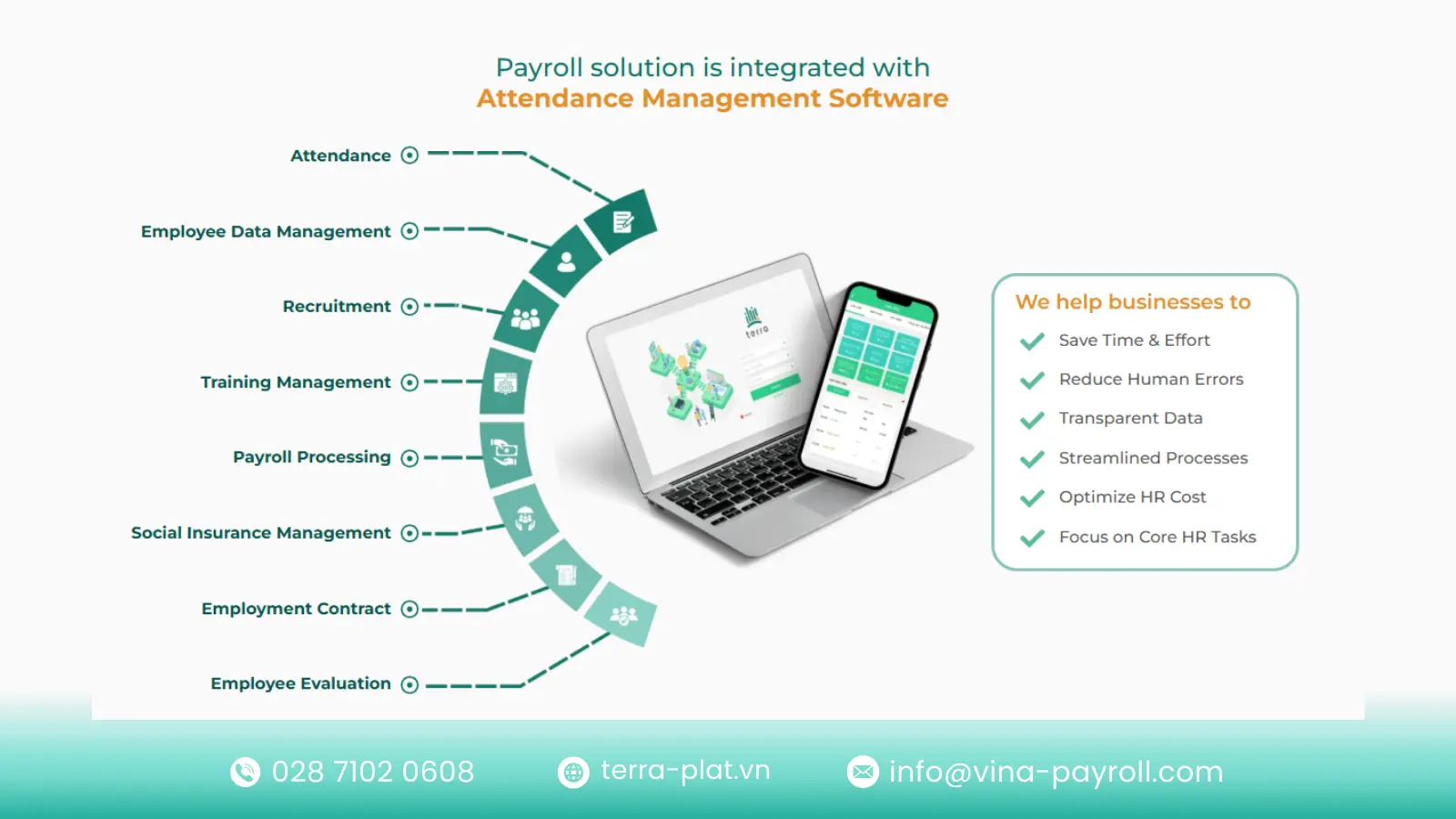
One of the most foundational elements of trust is the paycheck. To ensure absolute accuracy, terra implements a specialized Payroll BPaaS model.
Unified Model: Combines SaaS (cloud-based software) and BPO (process outsourcing) into one automated payroll solution, automating the process on a single cloud platform.
Optimization: Designed to reduce costs, limit risks, and ensure accuracy, going far beyond basic payroll outsourcing.
Seamless Integration: Unlike a standard payroll service, our system integrates with Time Attendance Management Software, ensuring seamless data flow from the Customer to VPO and Government Agencies.
Reliability: By using our payroll services and payroll outsourcing services, you eliminate errors. As a trusted payroll service in Vietnam, terra leverages outsourced payroll services to turn compliance into a key driver for employee satisfaction.
Contact terra HR Solution now for advice!
Conclusion
To increase employee satisfaction in 2026, leaders must move beyond perks and focus on the Employee Experience (EX). It requires a holistic approach that blends empathetic leadership style, efficient workflow design, and robust backend support.









