
Have you ever noticed that the price on the shelf isn’t always the final price at the register? That is indirect tax at work. In this post, terra explores what is indirect tax and highlights the key differences between direct and indirect taxation in Vietnam.
What is an indirect tax?
To navigate the financial landscape, one must distinguish between taxes paid on earnings and taxes paid on consumption.
Indirect Tax Meaning
An indirect tax is a levy imposed by the government on goods and services rather than on income or profits. Unlike direct taxes, the defining characteristic of an indirect tax is that the liability to pay can be shifted. The entity paying the tax to the government (the business) passes the financial burden to another party (the final consumer).
What Is Indirect Tax in Simple Terms?
Simply put, an indirect tax is a hidden tax collected by an intermediary. When you buy a coffee, fuel your car, or purchase clothes, you pay the tax as part of the price. The shopkeeper collects it from you and remits it to the tax authorities. You are the ultimate bearer of the cost, even though you don’t file the paperwork yourself.
Key Features of Indirect Tax
Tax Based on economic principles and Vietnamese regulations (referenced from terra’s insights), indirect taxes possess unique features:
- Low Psychological Resistance: Because the tax is hidden within the product price, consumers often pay it without psychological resistance compared to income tax.
- Broad Scope: It applies to the majority of goods and services in the market.
- Regressive Nature: The tax rate is the same for everyone regardless of income (e.g., a billionaire and a student pay the same tax on a bottle of water).
- Indirect Collection: The government collects revenue through intermediaries (producers/sellers) rather than directly from the payer.

How an Indirect Tax Works
The mechanism of an indirect tax is unique because it separates the legal obligation to pay from the actual financial burden. Unlike direct taxes which are straightforward, this system involves a chain of collection and remittance that moves through the entire economy before resting on the final user.
The Mechanism of Indirect Tax Collection
The government imposes the tax on the manufacturer or service provider. However, businesses treat this tax as a pass-through cost. They add the tax amount to the selling price, ensuring their profit margins remain intact while collecting revenue for the state.
Relationship Between Taxpayer and Tax Bearer
To understand the flow, we must distinguish between two key roles regarding who pays and who suffers the cost:
- The Impact of Tax: Falls on the person who pays the tax to the government (e.g., the shop owner filing the return).
- The Incidence of Tax: Falls on the person who ultimately bears the money loss (e.g., the customer buying the product). In an indirect tax system, the impact is on the seller, but the incidence is on the buyer.
This creates two distinct entities:
- Taxpayer (The Intermediary): The business legally responsible for calculating, filing, and paying the tax to the state treasury.
- Tax Bearer (The Consumer): The individual who actually suffers the reduction in purchasing power by paying the higher, tax-inclusive price.
Indirect Tax Flow From Consumer to Government
To understand the practical application of indirect tax, let’s look at a common transaction at a convenience store in Vietnam.
Imagine you purchase a product with a listed value of 100,000 VND, subject to a 10% VAT rate. Here is how the money flows:
- You Pay: 110,000 VND. (You pay the full price inclusive of tax. You are the Tax Bearer).
- The Store Keeps: 100,000 VND. (This is the actual revenue the business earns from selling the product).
- The Store Remits: 10,000 VND. (The store acts as the Taxpayer, collecting this amount from you and transferring it to the State Treasury).
Conclusion: The business serves as an intermediary. It does not pay the tax from its own pocket but merely facilitates the transfer of wealth from the consumer to the government.
Indirect Tax Diagram Explained
Visualizing the supply chain is the best way to grasp what is indirect tax and how value accumulates. An indirect tax diagram typically maps the journey of a product from raw material to the retail shelf, showing how tax is added at every step.
Indirect Tax Diagram Overview
The diagram illustrates a cascading or value-added flow depending on the system. In a standard VAT system, the tax liability moves from:
Government -> Manufacturer -> Wholesaler -> Retailer -> Final Consumer.
At each stage, the seller collects tax from the buyer and remits the difference to the government, ensuring no double taxation occurs.
Step-by-Step Explanation Using an Indirect Tax Diagram
Let’s visualize the lifecycle of a Smartphone with a 10% Tax rate:
Step 1: Manufacturer (The Creator)
- Sells phones to Wholesalers for $100.
- Adds 10% Tax ($10). Total Invoice: $110.
- Action: Manufacturer pays $10 to the Government.
Step 2: Wholesaler (The Middleman)
- Adds profit and sells to Retailer for $200.
- Adds 10% Tax ($20). Total Invoice: $220.
- Action: Wholesaler collected $20 but already paid $10 to the Manufacturer. They pay the difference ($10) to the Government.
Step 3: Retailer (The Seller)
- Adds profit and sells to consumers for $300.
- Adds 10% Tax ($30). Final Price: $330.
- Action: Retailer collected $30 but already paid $20 to Wholesaler. They pay the difference ($10) to the Government.
Final Result: The Government receives $10 + $10 + $10 = $30. The Consumer effectively pays this full $30 at the checkout.
| Step | Party Involved | Selling Price (Before Tax) | Indirect Tax (10%) | Invoice Total | Tax Paid to Government |
| 1 | Manufacturer | $100 | $10 | $110 | $10 |
| 2 | Wholesaler | $200 | $20 | $220 | $10 (20 collected – 10 already paid) |
| 3 | Retailer | $300 | $30 | $330 | $10 (30 collected – 20 already paid) |
| Final | Consumer | — | $30 (included in price) | $330 | $30 Total Revenue |

Common Types of Indirect Tax
While the concept of indirect taxation is global, each country has its own specific laws and classifications. In Vietnam, the tax system is structured to regulate consumption and protect domestic production through several key indirect taxes.
Value-Added Tax (VAT)
This is the most critical and widespread indirect tax in Vietnam, applicable to the majority of goods and services used for production, trading, and consumption.
- Feature: It is levied on the added value of goods or services at each stage of the supply chain (from manufacturing to consumption).
- Rates: Vietnam currently applies three main VAT rates: 0% (for exports), 5% (for essential goods like water and agriculture), and the standard rate of 10% (for most other commercial goods).
- Benefit: Businesses can declare and claim Input VAT credits, meaning they can deduct the VAT paid on purchases from the VAT collected on sales, preventing tax cascading.
Special Consumption Tax (SCT)
Often referred to internationally as Excise Duty, in Vietnam this is known as Special Consumption Tax.
- Feature: It is a single-stage tax levied on specific goods and services that the government considers luxury items or wishes to discourage from excessive consumption.
- Taxable Objects: It applies to harmful goods (cigarettes, alcohol, beer) and luxury items (automobiles under 24 seats, large displacement motorcycles, golf services, casino services).
- Impact: The tax rates are typically high (ranging from 10% to 150%) to regulate consumer behavior and increase state budget revenue.
Export and Import Duties
These are taxes imposed on goods crossing Vietnam’s borders, playing a vital role in trade regulation.
- Import Duty: Levied on goods entering Vietnam to protect local industries. Rates vary significantly depending on the HS Code and Free Trade Agreements (e.g., EVFTA, ATIGA).
- Export Duty: Levied on specific raw materials (like minerals or natural resources) to discourage the export of non-renewable resources.
Environmental Protection Tax
This is a specific indirect tax in Vietnam targeting products that negatively impact the environment.
- Feature: It is an absolute tax (a fixed amount in VND per unit) rather than a percentage.
- Taxable Objects: Common items include gasoline, diesel oil, coal, grease, and plastic bags. The goal is to enforce financial responsibility for environmental damage.

What Are Value-Added Taxes (VATs)?
As the dominant indirect tax globally, VAT represents a major shift in how governments generate revenue. It is designed to be neutral for businesses while effectively taxing domestic consumption.
VAT as a Major Indirect Tax
Value-Added Tax (VAT) is a consumption tax placed on a product whenever value is added at each stage of the supply chain, from production to the point of sale. The key innovation of VAT is the Input Tax Credit system. This allows businesses to deduct the VAT they paid on business expenses (inputs) from the VAT they collect from customers (outputs).
How VAT Is Applied at Each Stage of Production
Unlike a flat sales tax, VAT tracks the product’s journey.
- Raw Material Stage: A logger sells wood for $10 + $1 VAT. He pays the government $1.
- Processing Stage: A factory buys the wood ($1 tax paid) and turns it into a table worth $50 + $5 VAT. The factory collects $5 but reclaims the $1 paid earlier. They pay the government $4.
- Result: The government gets revenue at every step, making tax evasion difficult because businesses need invoices to claim their credits.
VAT vs Sales Tax
The distinction is vital for business operations:
- VAT: Cumulative but creditable. It involves a trail of invoices and reporting at every B2B transaction.
- Sales Tax: Simple but fragile. It relies entirely on the final retailer. If the retailer evades tax, the government loses 100% of the revenue.
Direct vs Indirect Tax
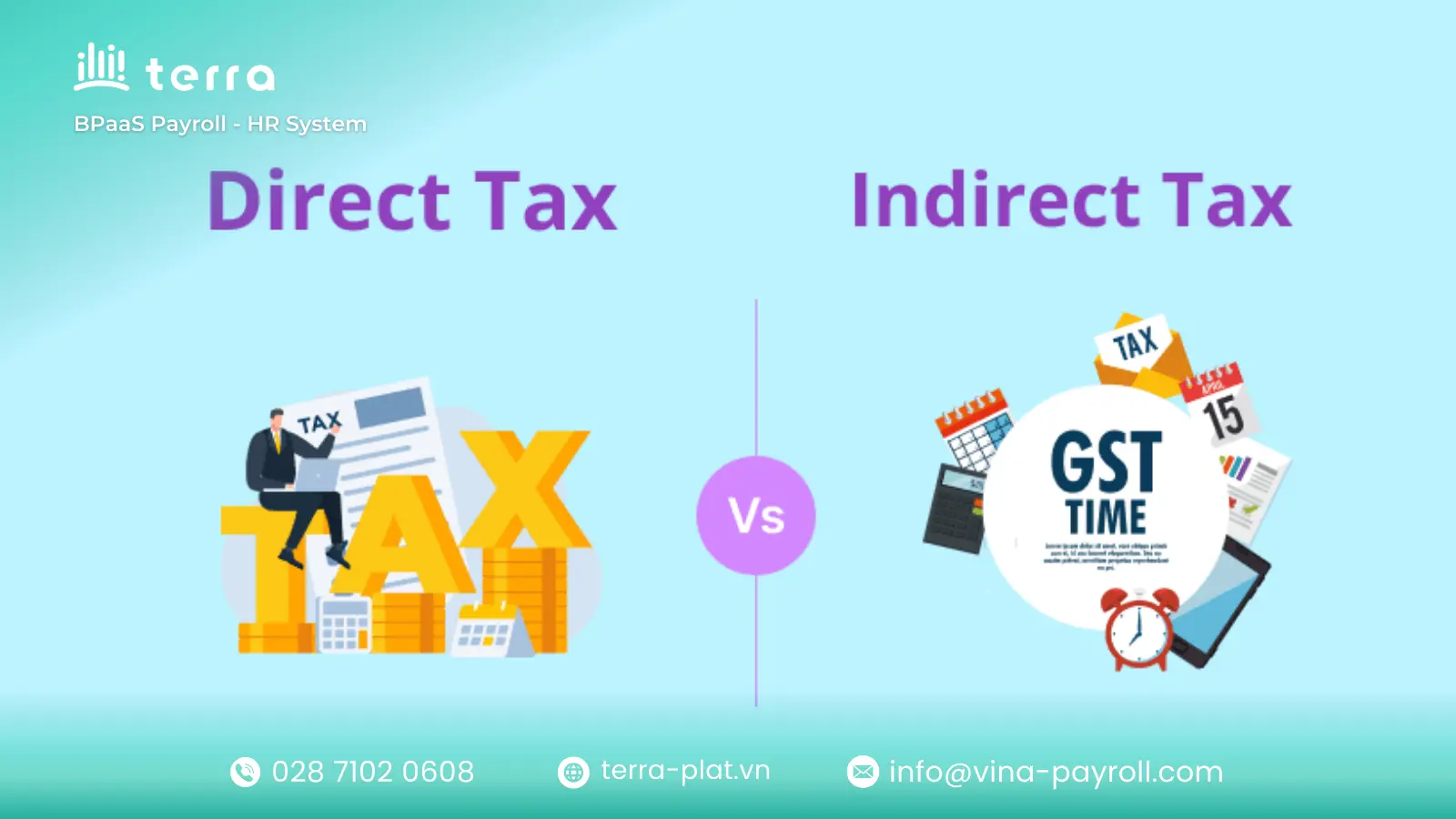
Understanding the distinction between direct vs indirect tax is fundamental for business owners and taxpayers.
Definition of Direct Tax
A direct tax is paid directly by an individual or entity to the government. The burden cannot be shifted. If the government taxes your income, you must pay it from your earnings.
Key Differences Between Direct and Indirect Tax
The fundamental difference between these two tax types lies in the transferability of the burden. While direct taxes must be paid by the income earner, indirect taxes allow the financial liability to be shifted from the seller to the final consumer.
| Feature | Direct Tax | Indirect Tax |
| Incidence of Tax | Falls on the same person(Taxpayer = Tax Bearer). | Shifts from seller to buyer (Taxpayer # Tax Bearer). |
| Nature | Progressive: Rates increase as income increases (Fairer). | Regressive: Same rate for all, burdening lower-income earners more. |
| Evasion | Possible (e.g., underreporting income). | Difficult (built into the price of goods). |
| Inflation Impact | Helps control inflation (reduces disposable income). | Can push inflation up (increases prices). |
| Examples | Personal Income Tax (PIT), Corporate Income Tax (CIT). | VAT, Excise Duty, Environmental Tax. |
Indirect Taxes in Vietnam
Vietnam utilizes a robust system of indirect taxes. If you are doing business here, you must be familiar with these specific categories.
Overview of Indirect Taxes in Vietnam and Common Types of Indirect Tax in Vietnam
- Value Added Tax (VAT): The most common tax. The standard rate is 10%, with reduced rates (5% or 0%) for essential goods like water, medical equipment, and exports. (Read more on VAT Vietnam).
- 0 percent – For eligible exports of goods/services. Under the new VAT law, additional requirements are introduced, and businesses should pay more attention to ensure compliance.
- 5 percent – For essential goods and services.
- 10 percent – Standard rate for most goods and services. Until December 31, 2026, it is 8 percent, except for some goods and services.
- Special Consumption Tax (SCT): Applied to goods and services considered luxuries or those the state wishes to discourage.
- Examples: Cigarettes, alcohol, beer, automobiles under 24 seats, golf services, lottery.
- Import and Export Duties: Taxes levied on goods crossing Vietnam’s borders. Rates depend on the HS Code and trade agreements (e.g., EVFTA, ATIGA).
- Environmental Protection Tax: An indirect tax often overlooked in general guides. It applies to products that negatively impact the environment, such as gasoline, diesel, grease, coal, and plastic bags.
| Tax Type | Applicable To | Standard Rates (Vietnam) |
| VAT | Most goods and services | 0%, 5%, 8%, 10% |
| SCT | Luxury/Harmful goods | 10% – 150% (Specific to item) |
| Import Duty | Imported goods | 0% – 135% (Depends on HS Code) |
| Environment Tax | Pollutants (Fuel, Plastic) | Fixed amount per unit (e.g., VND per liter) |

How Businesses Offset the Cost of Indirect Taxes
Since businesses are legally responsible for remitting these taxes, they must employ strategic financial management to ensure these costs do not erode their profit margins. It involves more than just raising prices; it requires smart cash flow handling.
Passing the Tax Burden to Consumers
The primary strategy is pricing. Businesses calculate the tax-exclusive price and add the required percentage (e.g., +10% VAT) to reach the retail price. This ensures the tax does not eat into net profits.
Pricing and Cost Management Strategies
In competitive markets where customers are price-sensitive (high elasticity), businesses cannot simply hike prices. To offset the indirect tax burden without losing sales, they use:
- Input Tax Credit Optimization: Ensuring every valid business expense (electricity, rent, raw materials) is documented to claim maximum tax refunds (in VAT systems).
- Supply Chain Negotiation: Pressuring suppliers to lower base costs so the final tax-inclusive price remains competitive.
- Backward Shifting: Reducing the price paid to suppliers or wages to absorb the tax cost (less common and riskier).
Frequently Asked Questions (FAQs) About Indirect Tax
Navigating the terminology of taxation can be confusing. Here are precise answers to the most common questions regarding what is indirect tax.
Who Ultimately Pays Indirect Tax?
Answer: The Final Consumer.
Although the business files the return and transfers the money to the tax authority, the actual funds are sourced from the consumer’s payment at the point of sale. The business is merely a conduit.
Is Indirect Tax Regressive or Fair?
Answer: It is generally considered regressive.
An indirect tax applies the same rate (e.g., 10%) to everyone, regardless of wealth. This means a low-income earner spends a higher proportion of their total income on these taxes compared to a high-income earner buying the same essential goods.
Is Indirect Tax Avoidable?
Answer: Generally, no.
Unlike income tax where you can use deductions to lower your liability, indirect tax is attached to the goods themselves. The only way to avoid it is to not purchase the taxable goods or services.
Why Income Tax Is Classified as a Direct Tax
Answer: Because the tax burden cannot be shifted to another person.
Income tax is direct or indirect? It is strictly direct. The person who earns the money is legally and financially responsible. You cannot ask a customer or employer to pay your personal income tax for you; it comes directly from your wealth.

PIT finalization services in Vietnam
While indirect taxes are handled automatically at the point of sale, managing direct taxes requires proactive annual reporting. terra offers a professional Personal income tax finalization service designed to ensure compliance and relieve the administrative burden for both enterprises and individuals.
Why Choose terra’s Service?
- Efficiency & Savings: Reduce salary and tax processing burdens by 30% and optimize operational costs by up to 20%.
- Absolute Compliance: We guarantee 100% accuracy and strict adherence to current laws, effectively minimizing tax risks.
Our Comprehensive Scope: Whether you need a PIT finalization service for a company or an individual with multiple income sources, we cover all essential tasks:
- For Individuals: We assist with Tax ID verification, dependent checks for deductions, and filing the final personal income tax finalization return.
- For Enterprises: We review payroll formulas, recalculate data, submit PIT returns, and prepare tax deduction certificates for staff.
Commitment to Quality: Following the motto “Accuracy – Speed – Security,” terra manages the entire lifecycle from information reception to final submission. We ensure your financial data is protected while delivering precise results.

Contact terra HR Solution now for advice!
Conclusion
In summary, understanding what is indirect tax reveals the hidden layer of costs in our daily purchases. While the indirect tax meaning centers on shifting the burden to consumers, businesses must navigate complex systems like VAT Vietnam to remain compliant. Whether you are analyzing an indirect tax diagram or preparing for annual reporting, knowing the difference between direct vs indirect tax is essential for financial literacy.









