
In the current business landscape, success is about balancing operational excellence with disruptive growth. In this ultimate guide, terra will break down the DNA of both frameworks, explore their critical differences, and most importantly show you how to combine the “stability” of KPIs with the “velocity” of OKRs to build a resilient, high-growth organization.
OKR vs KPI: Overview of performance frameworks
To navigate the complexities of organizational growth, leaders must distinguish between running the business and changing the business.
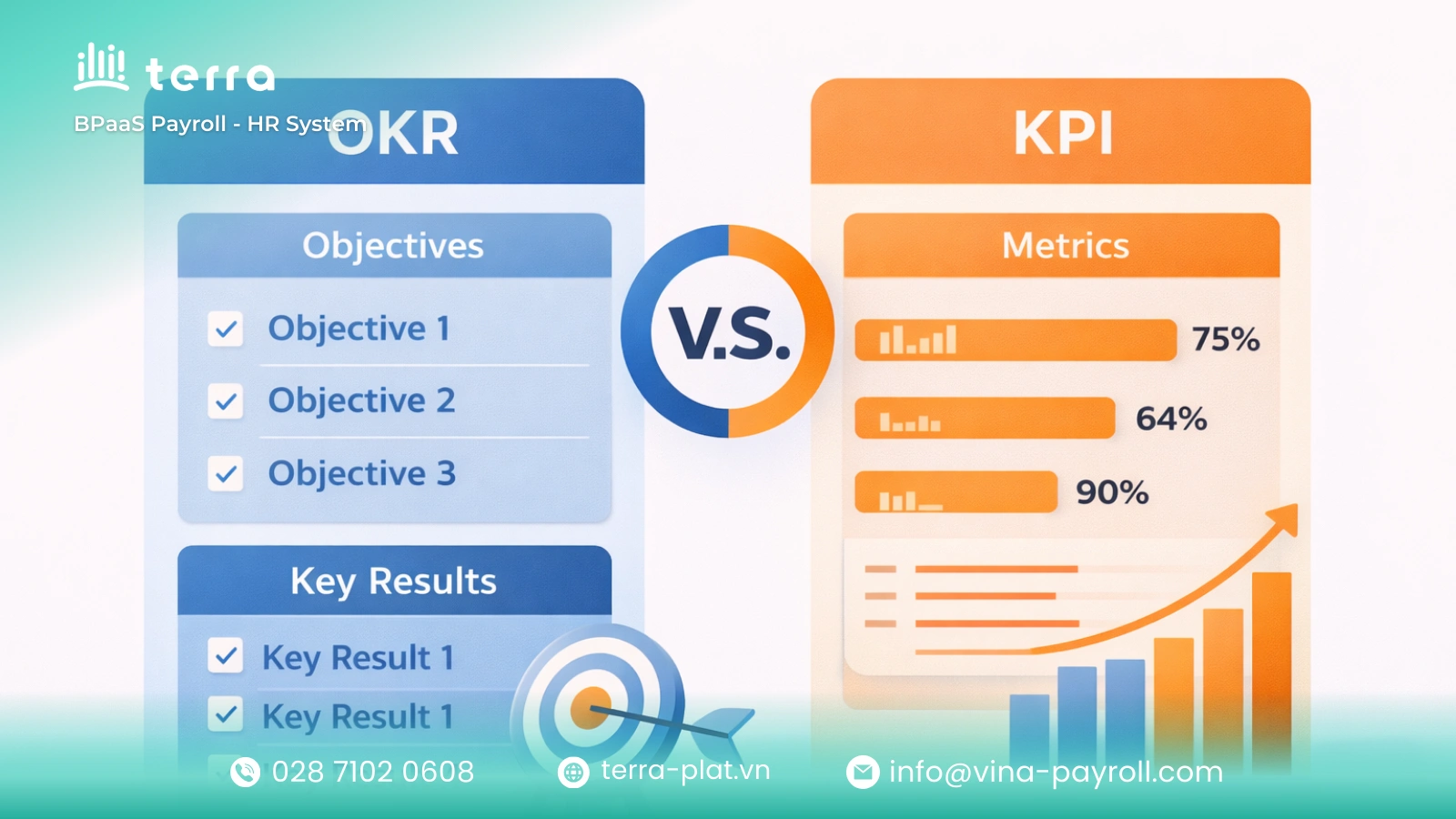
Why is it important to measure performance?
If you aren’t measuring, you’re just guessing. Performance measurement is the data-driven “pulse” of your organization, transforming gut feelings into actionable insights. In a world of infinite distractions, clear metrics act as a filter for what truly matters.
Effective performance measurement ensures:
- Strategic alignment: It bridges the gap between high-level vision and daily execution. When everyone knows the “North Star,” they can row in the same direction.
- Radical accountability: By defining what success looks like, teams take genuine ownership of their outputs. It moves the conversation from “I’ve been busy” to “I’ve delivered results.”
- Operational transparency: Data is the great equalizer. It makes progress (or the lack thereof) visible to every stakeholder, fostering a culture of trust rather than micro-management.
- Objective decision-making: Metrics provide the “why” behind pivots. Without them, you’re essentially throwing darts in a dark room and hoping for a bullseye.
The role of OKRs and KPIs in modern organizations
Think of your organization as a high-performance vehicle. To win the race, you need two distinct systems working in harmony:
- KPIs (The Dashboard): These are your vital signs. KPIs tell you if the engine is overheating, how much fuel you have left, and your current speed. They monitor the “steady-state” health of your business, ensuring that your core operations remain stable and efficient.
- OKRs (The GPS): This is your destination. Your GPS doesn’t care how much fuel you have; it cares about where you are going and how fast you can get there. OKRs are designed to drive ambitious, transformative change, pushing the organization toward new horizons and “stretch” goals that seem impossible at the start.
In short: KPIs keep the lights on, while OKRs light the way to the future. Organizations that rely solely on KPIs tend to stagnate, while those that only use OKRs often burn out due to a lack of operational stability. Success lies in the synergy of both.
What is a KPI?
If you can’t measure it, you can’t manage it. In the world of performance frameworks, the KPI (Key Performance Indicator) is the gold standard for tracking operational success. While many businesses track hundreds of metrics, a “Key” indicator is one that directly impacts the bottom line and overall organizational structure health.
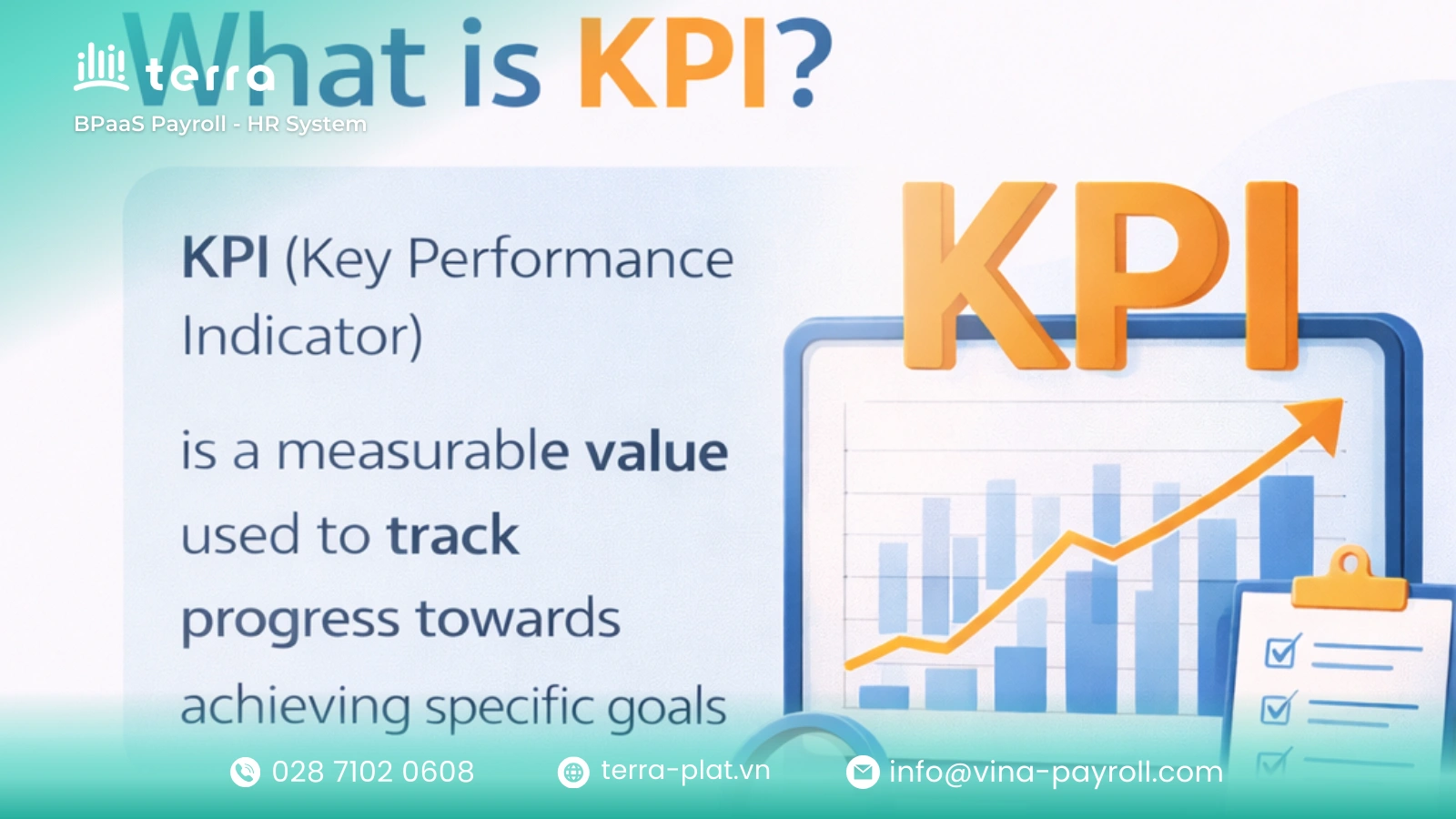
KPIs meaning and definition
KPI is a quantifiable measurement used to evaluate how effectively a company, department, or individual is achieving its core business objectives.
Unlike aspirational goals, KPIs are often referred to as “health metrics.” They act as a continuous feedback loop, monitoring whether your “business as usual” (BAU) processes are functioning within an optimal range.
If your organization were a living organism, KPIs would be the vital signs, blood pressure, heart rate, and temperature, that indicate whether the system is stable or in need of immediate intervention.
The benefits of setting KPIs
Implementing a robust KPI framework does more than just provide numbers; it creates a culture of precision. The primary benefits include:
- Operational sustainability: KPIs help teams maintain high standards for recurring, day-to-day tasks. By setting a baseline, you ensure that quality doesn’t slip as the company scales.
- An early warning system: One of the most critical roles of a KPI is risk mitigation. When a stable process starts to drift, for example, if customer churn ticks upward, the KPI serves as a “red flag,” allowing leaders to course-correct before a minor dip becomes a crisis.
- Objective clarity & focus: KPIs remove the “noise” from performance reviews. They provide a clear, binary “pass/fail” benchmark, ensuring that every team member understands exactly what is expected of them in their specific role.
- Historical benchmarking: Over time, KPIs provide a wealth of historical data, allowing organizations to spot seasonal trends and set more realistic targets for future growth.
Common KPI examples in organizations
To be effective, a KPI must be SMART: Specific, Measurable, Achievable, Relevant, and Time-bound. They are typically linked to long-term stability rather than short-term bursts of activity.
What’s an example of a KPI?
Depending on the department, a KPI will focus on different levers of success:
- Sales & Revenue:
Metric: Monthly Recurring Revenue (MRR).
Target: Maintain a minimum of $100k MRR with less than 2% fluctuation.
- Customer experience:
Metric: Average First Response Time (FRT).
Target: Respond to all high-priority support tickets in under 2 hours.
- Marketing Efficiency:
Metric: Cost Per Lead (CPL).
Target: Keep the average acquisition cost below $15 per qualified lead.
- Manufacturing & Logistics:
Metric: Defect Rate.
Target: Ensure that fewer than 0.5% of units produced require rework or disposal.
- Human Resources:
Metric: Employee Turnover Rate.
Target: Maintain an annual voluntary turnover rate of less than 10%.
What is an OKR?
If KPIs are the “vital signs” of your business, OKRs (Objectives and Key Results) are the “north star” guiding your most ambitious expeditions. While KPIs monitor the present, OKRs are designed to bridge the gap between where you are today and where you want to be in the future.
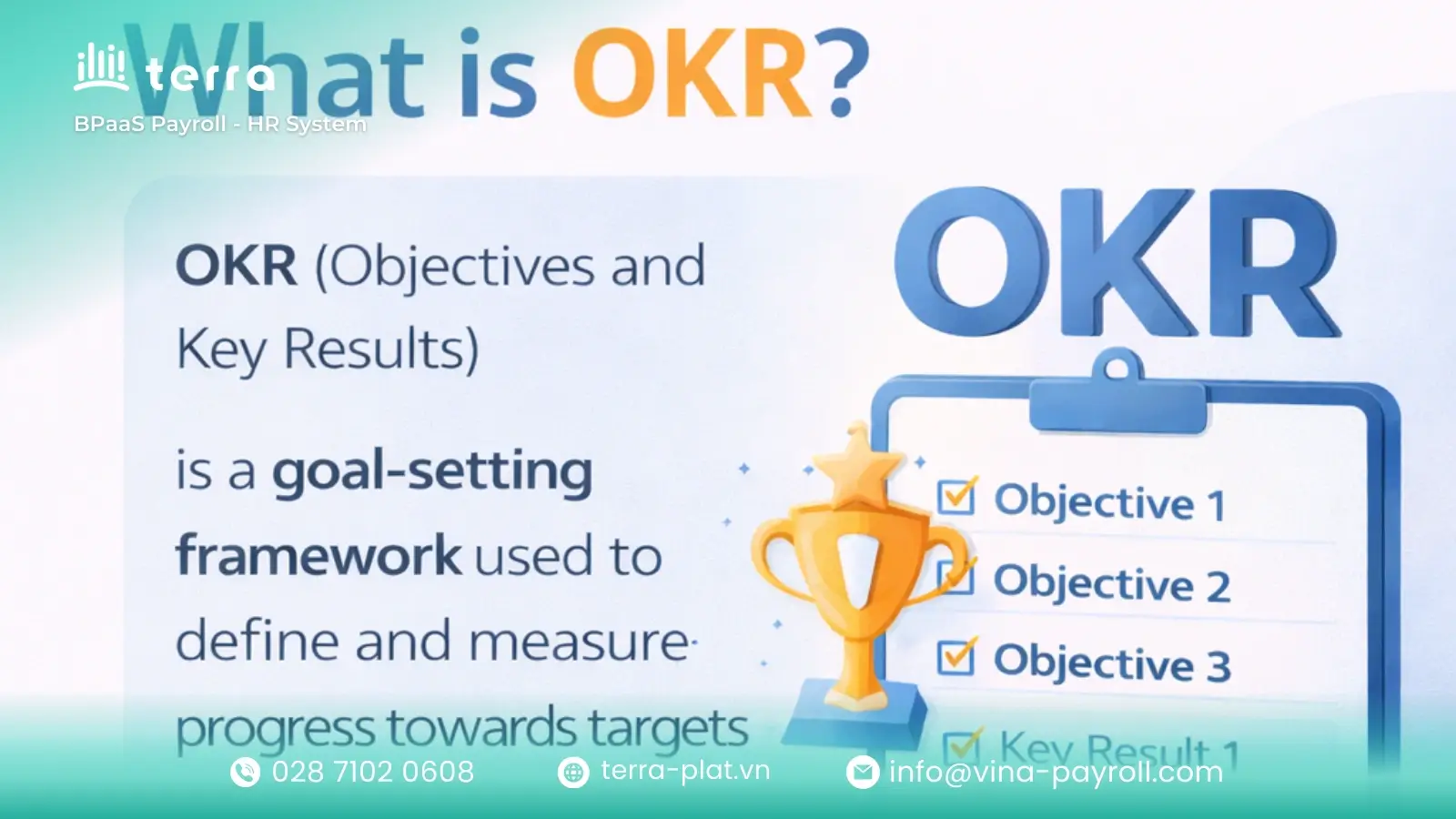
OKRs meaning and definition
Originally pioneered by Andy Grove at Intel and later popularized globally by John Doerr at Google, the OKR framework is more than just a goal-setting tool, it is a management philosophy.
An OKR meaning collaborative protocol used by teams and individuals to set challenging, ambitious goals with measurable results. Unlike traditional top-down management, OKRs are designed to be transparent, bottom-up, and intentionally aggressive. In the world of OKRs, achieving 100% of your goal every time isn’t a sign of success; it’s a sign that your goals weren’t ambitious enough.
How the OKR framework works
The power of the OKR framework lies in its simplicity. It consists of two distinct components:
- The objective (The “Where”): A high-level, qualitative, and inspirational statement. It should be memorable, provide direction, and motivate the team. It answers the question: What do we want to achieve?
- Key results (The “How”): A set of 3 to 5 quantitative, outcome-based metrics. These are not a “to-do list”; they are the evidence that the Objective has been met. They answer the question: How will we know if we’ve reached our Objective?
The benefits of setting OKRs
Why have the world’s most innovative companies ditched traditional planning for OKRs? The benefits are transformative:
- Dynamic agility: OKRs are typically set on a quarterly cycle. This allows organizations to pivot quickly in response to market changes rather than being locked into rigid annual plans.
- Laser focus: By limiting a team to 2–3 Objectives, the framework forces leaders to say “no” to good ideas so they can say “yes” to great ones.
- Unmatched innovation: OKRs encourage “Stretch Goals.” By aiming for the “moonshot,” teams are forced to rethink existing processes and innovate, often achieving far more than they would with safe, conservative targets.
- Vertical & horizontal alignment: OKRs are public. Everyone from the CEO to the intern can see each other’s goals, ensuring that every effort is synchronized toward the same vision.
What’s an example of an OKR?
To see an OKR in action, let’s look at a company aiming for regional dominance in the tech space.
- Objective: Become the undisputed #1 food delivery platform in the Southeast region.
Key result 1: Achieve a consistent 4.8-star rating on both iOS and Android platforms.
Key result 2: Optimize logistics to reduce average delivery time from 40 minutes to 25 minutes.
Key result 3: Increase Monthly Active Users (MAU) by 30% through targeted expansion campaigns.
Expert Insight: Notice how this OKR template balances three critical levers: Quality (Rating), Efficiency (Delivery Time), and Growth (MAU). If the team only focused on growth, quality might suffer. The OKR framework ensures holistic success.
OKRs vs KPIs: The main differences
While OKRs and KPIs both live in the world of performance management, their “DNA” is fundamentally different. One is designed to keep you on the road, while the other is designed to help you build a faster car. To use them effectively, you must first understand where they overlap and where they diverge.
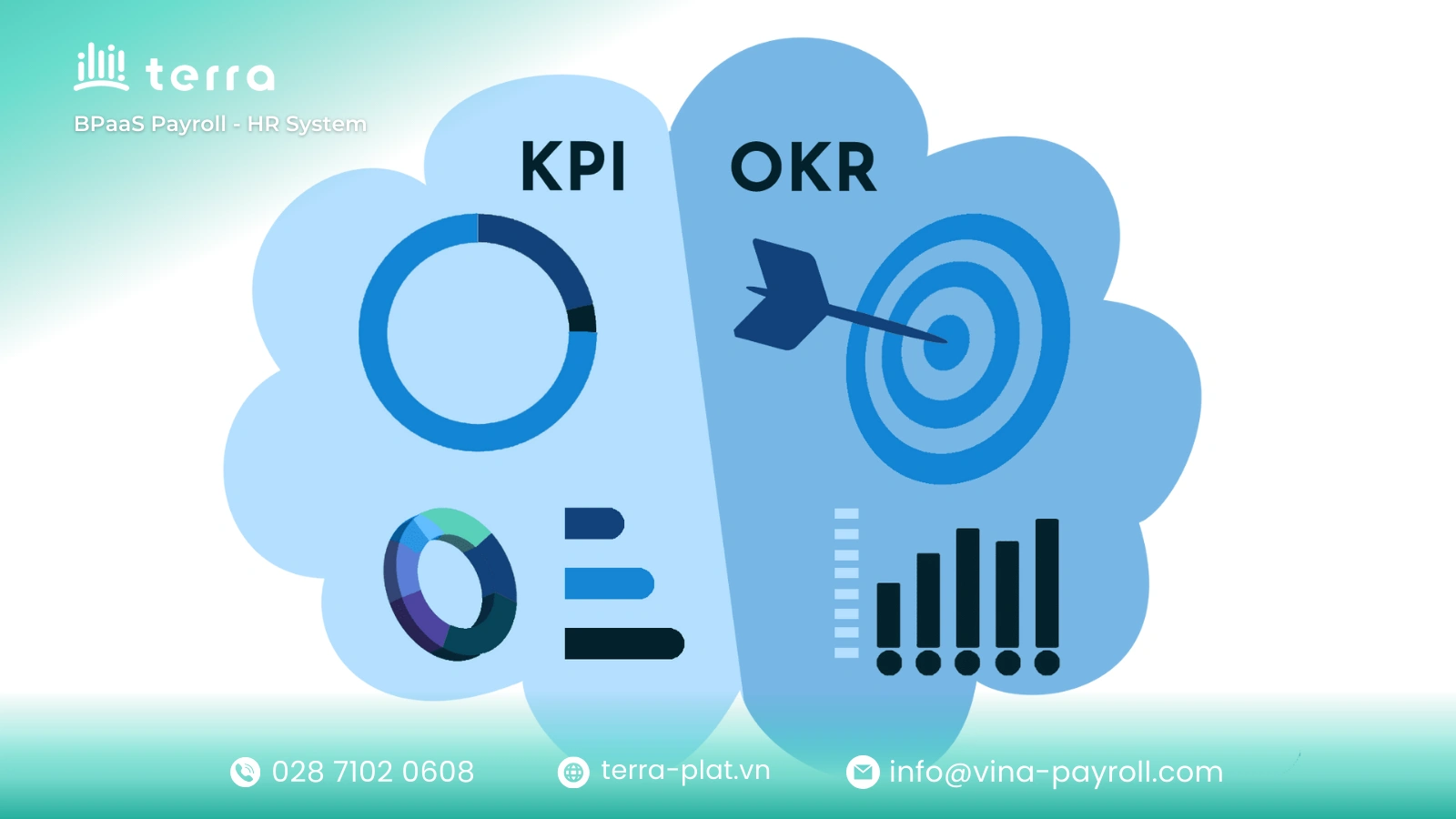
Similarities between OKRs and KPIs
Before looking at the friction points, it’s important to recognize that these frameworks are built on the same foundation:
- Data-driven DNA: Both rely on quantifiable, objective metrics rather than subjective “feelings” about progress.
- The need for buy-in: Neither framework works in a vacuum. Both require transparency, team alignment, and a commitment to regular tracking to be effective.
- Outcome-oriented: Both aim to eliminate “busy work” and focus the organization on high-value results that improve overall performance.
- SMARTcriteria: Effective KPIs and Key Results usually follow the SMART protocol (Specific, Measurable, Achievable, Relevant, and Time-bound).
Key differences between OKRs and KPIs
| Feature | KPI (Key Performance Indicator) | OKR (Objectives and Key Results) |
| Primary Purpose | Monitoring “Business as Usual” and health. | Driving “Bold Change” and transformation. |
| Foundation | Based on past benchmarks and stability. | Mission-driven, aspirational, and forward-looking. |
| Timing | Ongoing, long-term, and “always-on.” | Time-bound, usually in 90-day (quarterly) cycles. |
| Success Rate | 100% achievement is the baseline expectation. | 60–70% success is considered a high-performing “stretch.” |
| Scope | Measures a specific output or standalone metric. | A holistic system linking goals to specific outcomes. |
| Culture | Risk-averse; focuses on maintaining standards. | Risk-tolerant; focuses on “failing forward” to innovate. |
Purpose: Checking performance vs reaching ambitious goals
The simplest way to distinguish the two is through the Car Analogy:
- KPIs are your dashboard. They tell you if the engine is running, if you have enough oil, and if you’re speeding. If a KPI light turns red, you pull over and fix it.
- OKRs are your GPS. They define the new territory you are trying to reach. You don’t look at the GPS to see if the engine is okay; you look at it to see if you are on the right path to your destination.
Scope: One number vs a complete system
A KPI is often an isolated metric. For example, “Conversion Rate” is a KPI. It tells you a specific truth about a specific process. An OKR, however, is a story of success. It doesn’t just give you a number; it provides context.
If your objective is to “Provide a World-Class Checkout Experience”, your Key Results might include improving the Conversion Rate (a KPI), but also reducing page load speed and increasing the average order value. The OKR connects these metrics to a larger purpose.
Timing: Always-on vs time-bound
KPIs are marathon runners. They are measured indefinitely. You will likely track “Revenue” or “Customer Retention” for as long as your business exists. There is no “end date” for a KPI.
OKRs are sprinters. They have a built-in shelf life. An OKR is a concentrated burst of energy focused on a specific shift over a set probation period (usually 3 months). Once the quarter ends, the OKR is graded, closed, and a new one is born to address the next strategic priority.
The philosophy of success: 100% vs. 70%
In the world of KPIs, falling short of 100% is usually a sign of failure or operational inefficiency. If your KPI is “99.9% Server Uptime” and you hit 95%, you have a problem. In the world of OKRs, hitting 100% too often is actually a red flag, it means you are “sandbagging” or setting goals that are too easy.
The sweet spot for an OKR is 60-70%. This “Stretch Goal” philosophy encourages teams to dream bigger and achieve more than they thought possible.
OKR vs KPI: Expert perspectives and best practices
When you look at companies like Google, LinkedIn, or Adobe, they don’t treat OKRs and KPIs as competing ideologies. Instead, they view them as a synchronized ecosystem. To understand how the world’s top performers manage this, we can look at the analogies and “myth-busting” shared by global management experts.
How international OKR experts distinguish OKRs and KPIs
Global experts, including pioneers like John Doerr, often use the Medical Analogy to clarify the relationship between these two frameworks. It is the most effective way to visualize how they interact within a business:
- KPIs are your “Vital Signs”: Imagine you are at a check-up. The doctor measures your heart rate, blood pressure, and oxygen levels. These are your KPIs. As long as they stay within a specific, healthy range, your body is functioning as expected. You don’t necessarily “strive” to have a blood pressure of 120/80; you simply need to maintain it to stay alive.
- OKRs are your “Fitness Goals”: Now, imagine you decide to run a marathon in under 4 hours or climb Mount Everest. Your vital signs (KPIs) won’t get you there, they only tell you if you’re healthy enough to try. To reach that peak, you need a training program, specific milestones, and an aggressive push. These are your OKRs. You don’t need to climb Everest to survive, but you need that goal to excel and transform.
Expert Takeaway: If your “Vital Signs” (KPIs) are failing, you must stop focusing on your “Marathon” (OKRs) and fix your health first.
Common misconceptions about OKR vs KPI
Let’s see the most frequent myths:
Myth 1: The “Either/Or” Fallacy
The Misconception: “We are an OKR company now, so we don’t need KPIs anymore.”
The Reality: This is the biggest mistake a leader can make. Relying only on OKRs is like trying to fly a plane while only looking at the destination GPS, ignoring the fuel gauge and altitude meter. KPIs provide the essential baseline. Without them, you might achieve your OKRs but accidentally bankrupt the company or burn out your staff in the process.
Myth 2: “OKRs are just KPIs with a fancy new name.”
The Misconception: “My KPI was to sell $1M. My new OKR is to sell $1M. What’s the difference?”
The Reality: A KPI is a result; an OKR is the strategy to change that result. * KPI: Total Sales Revenue.
OKR Objective: “Revolutionize our inbound sales funnel to dominate the enterprise market.” The OKR focuses on the how and the transformation required to move the KPI from its current state to a new, higher level.
Myth 3: “Everything must be an OKR.”
The Misconception: “Let’s set 10 OKRs for every department so we cover everything.”
The Reality: If everything is a priority, nothing is. OKRs are for your top 2-3 strategic shifts. Everything else, the day-to-day operations, should remain as KPIs. Over-complicating your OKR list leads to “framework fatigue” and total loss of focus.
Best Practices for Harmonizing Both
- Keep them separate but linked: Use a dashboard that shows both your “Health Metrics” (KPIs) and your “Growth Bets” (OKRs).
- Promote failing KPIs: If a KPI stays “Red” for two consecutive months, it should automatically be considered for a dedicated OKR in the next quarter to solve the root cause.
- Review frequencies: Monitor KPIs weekly (or even daily) to ensure stability. Review OKR progress bi-weekly to ensure the “big moves” are actually moving.
OKR and KPI examples in real-world use cases
The theory is important, but how do these frameworks look in the heat of day-to-day operations? The most successful companies don’t just “set and forget” these metrics; they visualize them and allow them to interact dynamically.
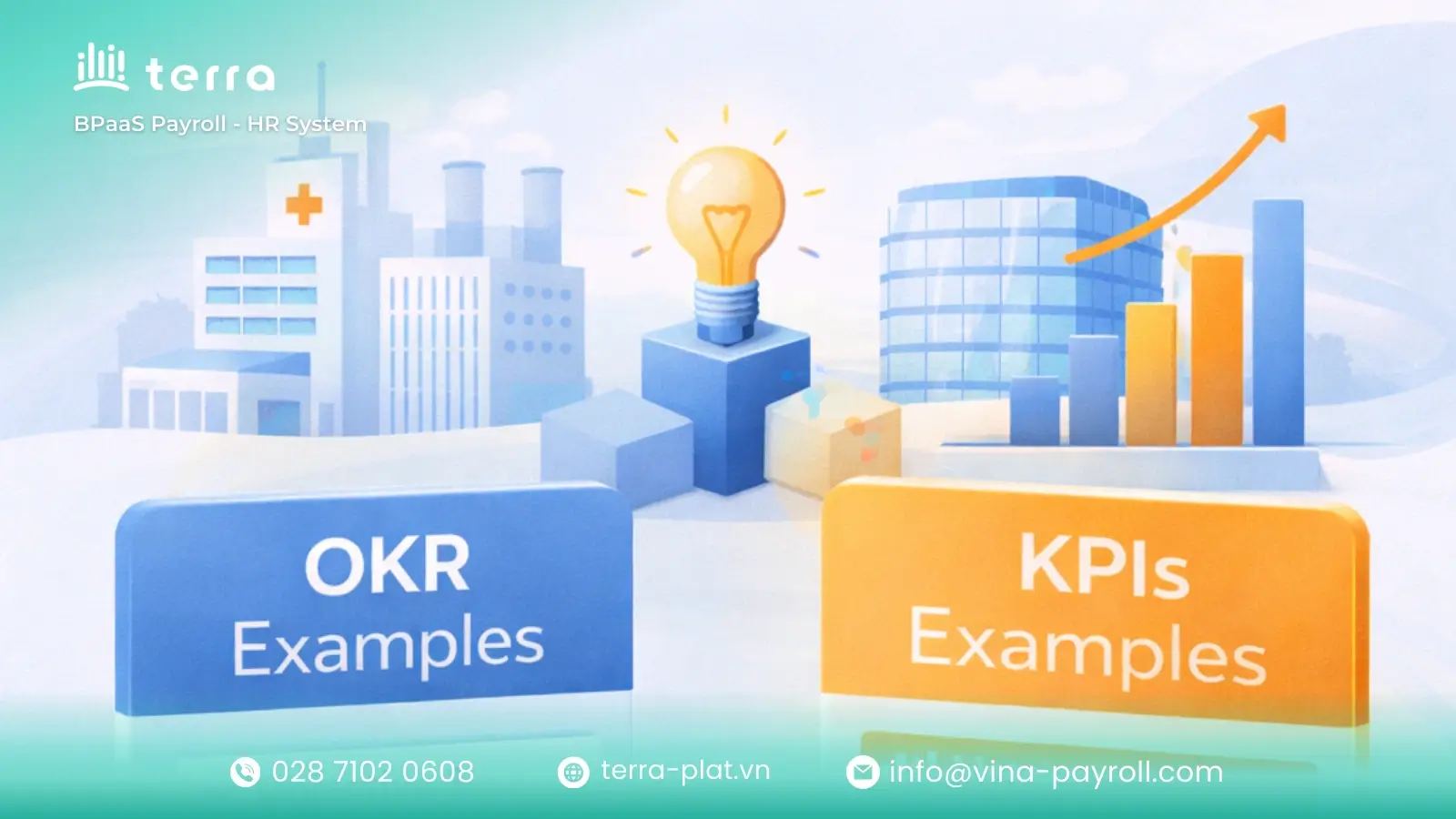
Visual KPI examples for business performance
To manage a business effectively, you need a Real-Time KPI Dashboard. Most modern organizations use a “Traffic Light” system to visualize health at a glance:
- Green (On Track): Customer Churn Rate at 2%. Your retention strategies are working; the “engine” is healthy. Target: <3%.
- Yellow (At Risk): Sales Pipeline Velocity. New leads are coming in, but they are moving through the funnel 15% slower than last month. Warning: Investigation needed.
- Red (Critical): Website Uptime at 95%. This is a crisis. Your target is 99.9%. When a KPI turns red, it demands immediate resource allocation to stop the bleeding.
Practical OKR examples highlighting OKR vs KPI differences
The most powerful use case for these two frameworks is the “Promotion Strategy.” If a KPI (a health metric) stays in the Red for too long, it should be promoted to an OKR to receive focused innovation and effort.
The Scenario: Your “Website Uptime” KPI has been failing for two months due to outdated server architecture.
- The Transition: You stop treating uptime as just a number to monitor and turn it into a strategic Objective for the engineering team.
- The OKR:
Objective: Stabilize our infrastructure to ensure world-class reliability and user trust.
Key result 1: Migrate 100% of legacy databases to the new cloud provider by end of Q2.
Key result 2: Implement an automated failover system, reducing “Time to Recovery” (MTTR) by 50%.
Key result 3: Achieve 99.99% uptime for the final 30 days of the quarter.
Why use HR KPIs
For Human Resources, KPIs are about maintaining the stability and efficiency of the talent engine. These metrics are “always-on” and measure how well the HR machine is running.
- Employee turnover rate: Measuring the percentage of employees who leave the organization (target: <10% annually).
- Cost per hire: Ensuring the recruitment process remains cost-effective.
- Time-to-fill: Measuring how quickly HR can replace an outgoing employee to prevent productivity gaps.
Why use HR OKRs
HR OKRs are used when you want to change the culture or transform the employee experience. They are not about maintenance; they are about evolution.
- Objective: Build a “Remote-First” culture that maximizes employee happiness and productivity.
Key result 1: Increase Employee Engagement Scores (eNPS) from 30 to 50 through new wellness initiatives.
Key result 2: Ensure 100% of managers complete “Leading Remote Teams” certification.
Key result 3: Launch a decentralized “Peer-to-Peer” recognition program with at least 70% monthly participation.
SEO Expert Insight: Notice the difference? The HR KPI tells you if people are leaving. The HR OKR tells you how you are going to make them want to stay in a whole new way.
Which is better: OKR or KPI for your business?
Choosing between OKRs and KPIs is like asking if a car needs a steering wheel or an engine, you won’t get very far without both.
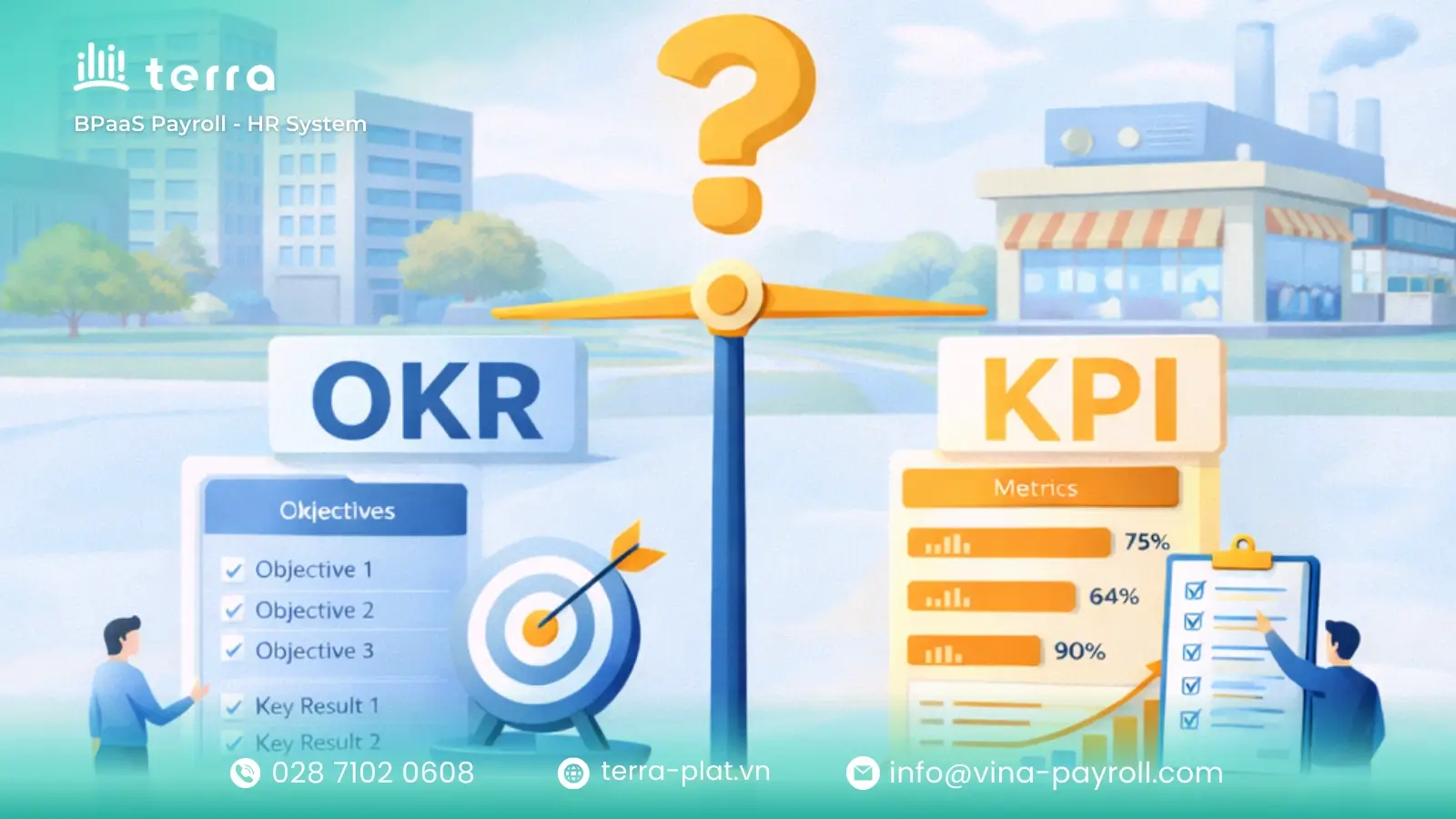
OKR and KPI: Which measurement method should companies choose?
The short answer is: You don’t choose; you integrate. Neither framework is inherently “better” than the other because they solve different problems:
- KPIs are for stability: They ensure you don’t go out of business today. They monitor the efficiency of your current machine.
- OKRs are for strategy: They ensure you are still relevant tomorrow. They provide the energy to build a better machine.
If you are a startup in a “move fast and break things” phase, your weight might tilt 70% toward OKRs. If you are a mature utility company where safety and uptime are everything, you might tilt 70% toward KPIs. But every healthy organization needs a blend of both.
Can OKRs replace KPIs?
The most common mistake in modern management is the “Great Replacement” theory, the idea that switching to OKRs means you can throw your KPIs in the trash.
The answer is a hard No.
- The risk of “OKR-only”: If you only track OKRs (ambitious goals), you might successfully launch a new product (Objective) but fail to notice that your existing customer support response time (KPI) has plummeted to dangerous levels. You “won” the goal but lost the foundation.
- The reality: KPIs provide the “Business as Usual” (BAU) health check. Without them, you are flying blind. You need KPIs to maintain the baseline so that your teams have the stability required to chase “Moonshot” OKRs.
Can KPIs and OKRs be used together?
Absolutely. In fact, this is considered the “Gold Standard” of modern management. When used together, they create a checks-and-balances system:
- KPIs monitor the baseline: They act as the “control center,” ensuring all departments are meeting their minimum required standards.
- OKRs focus on the 2-3 most important strategic shifts: They prevent the team from getting bogged down in “maintenance” and ensure that significant energy is always being spent on growth and innovation.
By using both, you create an organization that is both operationally excellent and strategically agile.
The real power: Using OKRs and KPIs together
Don’t think of OKRs and KPIs as rivals competing for your attention. Instead, think of them as a management power couple. While they have different personalities, they are most effective when they work in sync. When an organization successfully integrates both, they create a feedback loop that drives both efficiency and innovation.
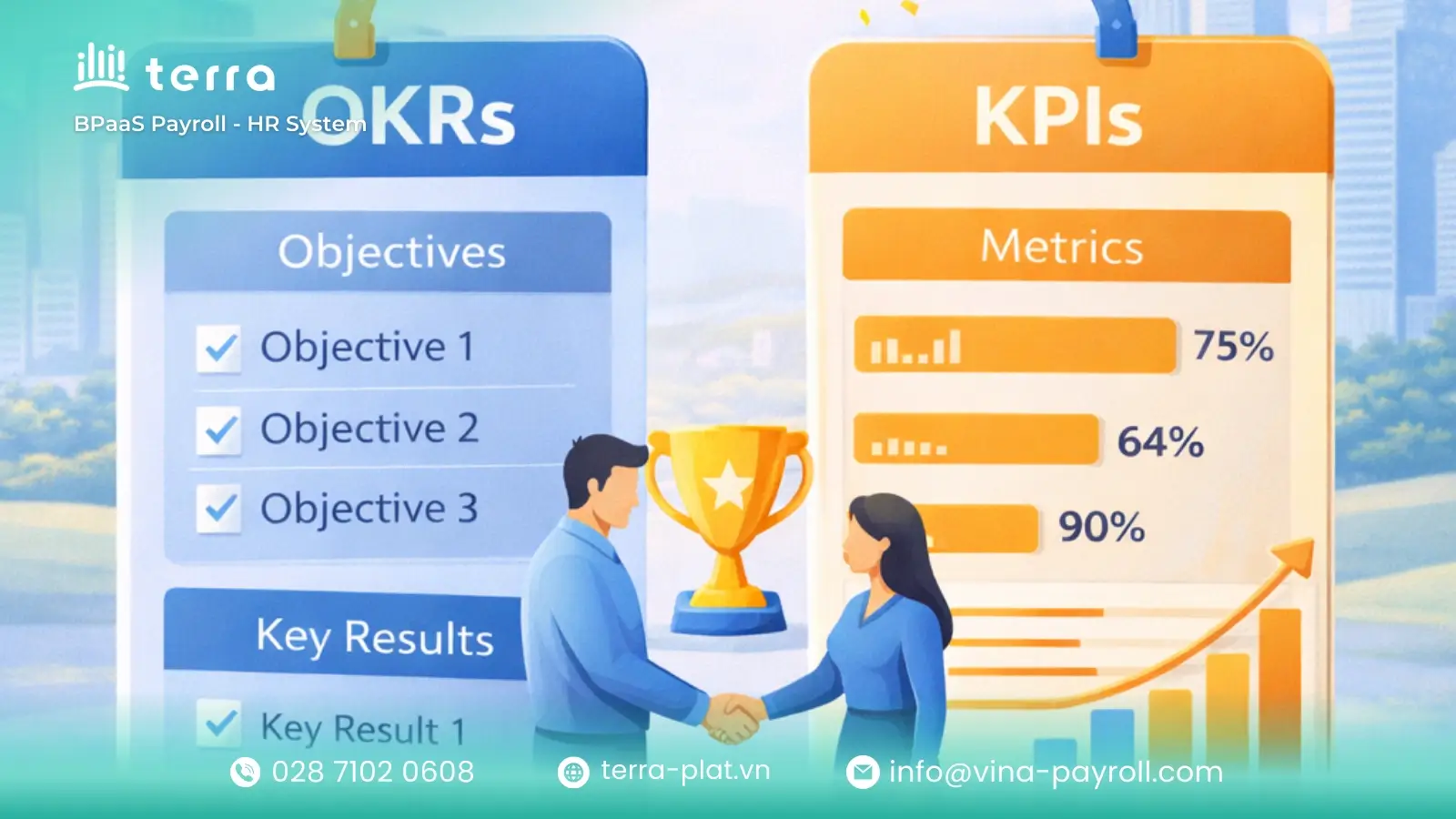
How KPIs support OKRs as measurable inputs
In a healthy ecosystem, KPIs are the scouts. They are out in the field, monitoring the terrain and reporting back. Often, a KPI provides the raw data and justification for your next big OKR.
- The catalyst effect: If your “Customer Satisfaction” KPI suddenly drops from 90% to 70%, it shouldn’t just be a red light on a dashboard. It becomes the catalyst for a strategic pivot.
- From data to action: That failing KPI leads directly to a new OKR Objective: “Rebuild our support infrastructure to restore customer trust.” Without the KPI, you wouldn’t have known where to point your OKR “firepower.”
Can KPIs be used as key results in OKRs?
The answer is a resounding yes, but with a twist. A Key Result is essentially a KPI that has been given a specific target and a strict deadline.
While a KPI is a continuous measurement (e.g., “We track NPS every month”), a Key Result is a project-based achievement.
Example of the Evolution:
The KPI (Continuous): Net Promoter Score (NPS).
The OKR Key Result (Time-bound): “Increase NPS from 40 to 60 by the end of Q3.”
By turning a KPI into a Key Result, you are telling your team: “This metric is so important right now that we are going to focus our creative energy on moving it significantly over the next 90 days.”
Can a KPI become an OKR?
In high-growth companies, metrics aren’t static. A “promotion” happens when a standard health metric (KPI) is elevated to a strategic priority (OKR). This usually happens in two scenarios:
- Critical underperformance: If a KPI has been in the “Red” for too long, it needs the structural focus of an OKR to be fixed.
- Strategic shift: If your company decides to pivot, for example, moving from a high-volume sales model to a high-value subscription model, your “Average Order Value” KPI might be promoted to an OKR Objective to lead that transformation.
Why is it important to use both OKRs and KPIs?
Using only one of these frameworks is like trying to navigate a ship with only a compass but no hull-integrity monitor (or vice-versa). Using both creates a balanced ecosystem:
- KPIs provide stability: They ensure that the “engine room” is functioning, the bills are being paid, and the customers aren’t leaving. They represent your operational floor.
- OKRs provide velocity: They ensure you are moving toward your long-term vision and outperforming the competition. They represent your strategic ceiling.
Without KPIs, your “bold growth” might lead to a structural collapse. Without OKRs, your “stable business” will eventually be disrupted by a more agile competitor. Together, they offer the perfect mix of predictability and progress.
Read more: What is 360 degree feedback?
Transitioning from KPIs to OKRs
Transitioning from a KPI-only culture to an OKR-driven one is not a “delete and replace” mission. It is an evolution. It’s about moving from a mindset of “How much did we do?” to “What impact did we create?” To make this shift successful, organizations need a structured approach that respects current stability while fostering future ambition.
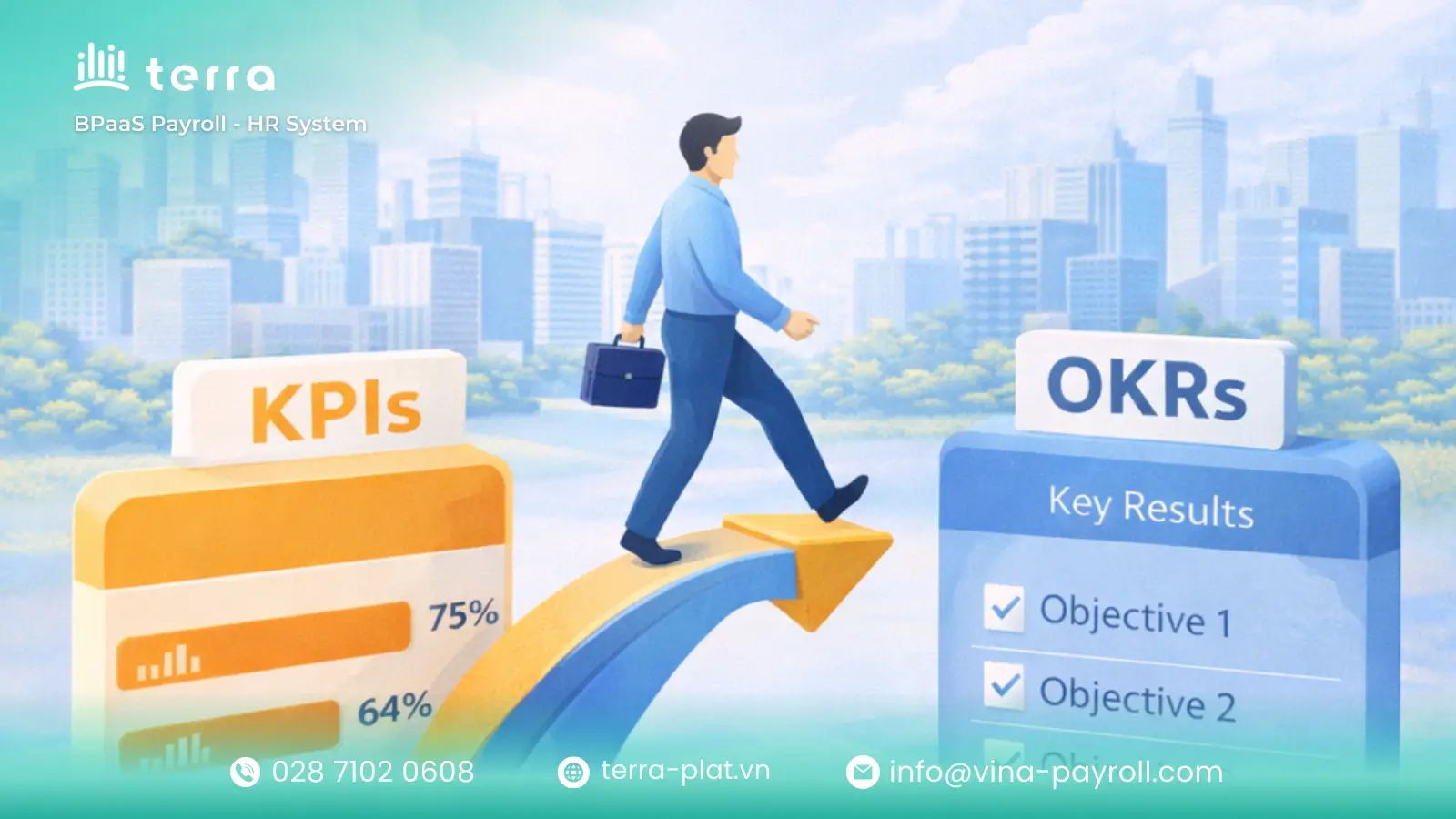
When should businesses move from KPIs to OKRs?
Not every company needs OKRs on day one, but there are specific “Strategic Inflection Points” where the move becomes necessary:
- The stagnation plateau: When your KPIs are all “Green,” yet your market share is shrinking or your growth has flatlined.
- The pivot: When you need to enter a new market, launch a major product, or change your entire business model.
- Cultural disconnection: When employees feel like “cogs in a machine” and don’t understand how their daily tasks contribute to the company’s vision.
- Hyper-growth: When the team is expanding so fast that traditional top-down KPIs can no longer maintain alignment.
Why KPIs alone are not enough for goal-driven growth
KPIs are essential, but they have a built-in “ceiling.” Because the expectation for a KPI is 100% success, teams naturally set conservative targets. This leads to:
- The maintenance trap: Teams become experts at keeping things the same, but they stop asking, “What’s next?”
- Historical bias: KPIs tell you what happened in the past; they are “lagging indicators.” They don’t provide the “leading indicators” needed to navigate future disruption.
- Lack of inspiration: Let’s be honest, rarely does anyone get excited about maintaining a “98% billing accuracy” KPI. OKRs provide the inspirational “Why” that drives high performance.
Step-by-step process to transition from KPIs to OKRs
- Audit your current KPIs: Identify which metrics are “Business as Usual” (remain as KPIs) and which are “Strategic Priorities” (candidates for OKRs).
- Define the “North Star” objective: Start at the top. What is the one transformative thing the company must achieve in the next 90 days?
- Draft bottom-up key results: Encourage teams to propose their own Key Results that support the top-level Objective.
- Decouple from compensation: This is critical. If OKRs are tied to bonuses, people will stop setting ambitious goals. Keep KPIs tied to performance reviews, but keep OKRs tied to learning and growth.
- Establish a ritual: Set bi-weekly “Check-ins” and quarterly “Retrospectives” to grade progress and reset for the next cycle.
Converting KPIs into OKR objectives and key results
You don’t need to reinvent the wheel; you can often “evolve” a KPI.
- The KPI: Average Revenue Per User (ARPU).
- The OKR objective: “Deliver such incredible value that customers naturally want to upgrade.”
- The key result: “Increase ARPU from $50 to $75 by launching three premium feature tiers.”
Defining meaningful and measurable key results
The most common mistake during a transition is writing a “To-Do List” instead of Key Results.
- Wrong (Activity): “Launch a new marketing campaign.”
- Right (Outcome): “Generate 500 qualified leads from the new marketing campaign.”
- The rule: A Key Result must have a number. If it doesn’t have a number, it’s not a Key Result; it’s just a task.
Tracking progress with the right monitoring tools
Manual tracking in spreadsheets is the #1 killer of OKR adoption, it’s cumbersome and lacks transparency. To succeed, you need a “Central Source of Truth.”
- Real-time dashboards: Tools like the terra HR System allow everyone to see progress in real-time, which builds momentum.
- Cascading views: You need to see how a junior designer’s Key Result rolls up into the CEO’s Objective.
- Integration: The best tools allow you to track your “always-on” KPIs and your “time-bound” OKRs in the same view, giving you a 360-degree look at organizational health.
Common mistakes to avoid when building KPIs and OKRs
Even the most well-intentioned performance systems can crumble if they are built on a shaky foundation. Many organizations treat OKRs and KPIs as “plug-and-play” solutions, only to find their teams confused, demotivated, or focused on the wrong things. To ensure your framework drives actual results, you must avoid these common pitfalls.
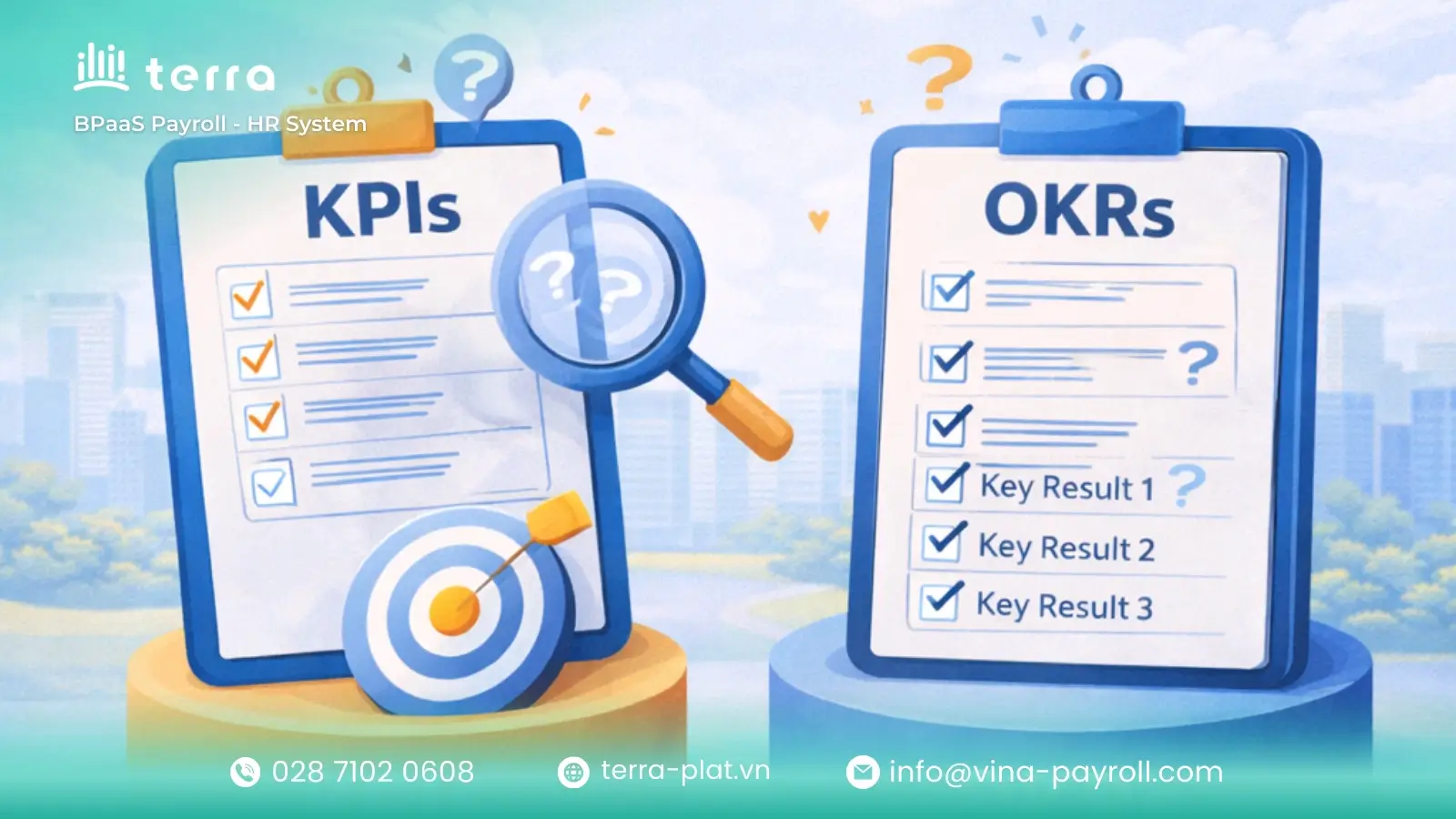
What not to do when building KPIs
KPIs are meant to be your “vital signs,” but they quickly become “white noise” if not implemented with precision. Avoid these three major errors:
- Measuring everything (The “Data Vomit” trap): The “K” in KPI stands for Key. If you are tracking 50 metrics for a single department, nothing is “key.” This leads to analysis paralysis.
Solution: Stick to 3-5 high-impact KPIs per role or department.
- Tracking vanity metrics: Measuring things like “social media likes” or “number of emails sent” might make a team look busy, but if these don’t correlate with revenue or customer satisfaction, they are useless.
Solution: Ensure every KPI has a direct line of sight to a business outcome.
- The “Set It and Forget It” Mentality: KPIs are not static. Market conditions change, and so should your benchmarks.
Solution: Review your KPI targets at least once a quarter to ensure they are still realistic and relevant.
What are some common mistakes to avoid with OKRs?
Because OKRs are designed for “stretch” and ambition, the mistakes here usually involve a lack of focus or a fear of failure.
- Treating OKRs like a to-do list: This is the #1 mistake. OKRs are about outcomes, not activities.
Incorrect KR: “Write 5 blog posts.” (Task)
Correct KR: “Generate 1,000 organic leads via the blog.” (Outcome)
- The “Sandbagging” strategy: When teams set goals they know they can hit 100% just to look good, the framework fails. OKRs should feel slightly uncomfortable.
Solution: Foster a culture where hitting 70% of a “moonshot” goal is celebrated as progress.
- Tying OKRs to compensation: If an employee’s bonus depends on hitting 100% of an OKR, they will never set ambitious goals.
Solution: Keep KPIs linked to performance reviews/bonuses, but treat OKRs as a separate developmental tool.
- Lack of transparency: OKRs lose their power if they are hidden in a manager’s private folder.
Solution: Use a public dashboard so everyone can see how their work connects to the company’s vision.
Key considerations when implementing KPIs and OKRs
To successfully run both frameworks simultaneously, keep these strategic considerations in mind:
- Data integrity is king: Your frameworks are only as good as the data feeding them. Ensure you have a “single source of truth” to avoid arguments over whose spreadsheet is “more correct.”
- Psychological safety: Both systems require honesty. If employees are afraid to report a “Red” KPI or a failing OKR, you lose your early warning system. Leadership must encourage radical candor.
- The 80/20 rule: 80% of your energy will likely go into maintaining your KPIs (the engine), while 20% of your most creative, focused energy should go into your OKRs (the growth).
- Software as an enabler: Attempting to manage the relationship between KPIs and OKRs in Excel is a recipe for manual error. Invest in a platform like terra HR System that allows you to link operational health metrics directly to strategic goals.
OKR vs KPI frequently asked questions (FAQ)
Navigating the nuances of performance frameworks often leads to a few recurring questions. Here are the definitive answers to the most common queries regarding OKRs and KPIs.
Can you have KPIs and OKRs together?
Yes, and you absolutely should. Think of them as a “power couple” for business management. KPIs provide the necessary stability and “business as usual” monitoring, while OKRs provide the focused energy needed for growth and transformation. Without KPIs, you might achieve your growth goals while your core operations collapse. Without OKRs, your stable business will eventually be outpaced by more innovative competitors.
How does an OKR differ from a KPI?
The primary difference lies in their intent:
- KPIs (health metrics): Measure the success of an ongoing process or activity. They tell you if you are maintaining your standard of excellence. (e.g., “Is our server uptime at 99.9%?”).
- OKRs (growth framework): Define a specific, ambitious destination and the measurable steps to get there. They tell you what you are trying to change or achieve next. (e.g., “Can we migrate our entire infrastructure to a more resilient cloud provider this quarter?”).
How often should OKRs and KPIs be reviewed?
Because they serve different functions, their “rhythm” is different:
- KPI reviews: These should be high-frequency. Most teams review their KPI dashboards weekly or even daily to ensure no “red lights” appear in their operations.
- OKR reviews: These follow a cyclical rhythm. Progress should be discussed in bi-weekly check-ins, but the formal “grading” and resetting of OKRs typically happen on a quarterly (90-day) basis. This gives enough time for ambitious projects to show results without losing agility.
Can OKRs replace KPIs in the long term?
No. Replacing KPIs with OKRs is a common management mistake that leads to “operational blindness.” OKRs are designed to be temporary and time-bound, they are the sprints.
KPIs are the marathon; they are permanent fixtures that protect your bottom line. An organization that only tracks OKRs is like a pilot who knows where they want to land but isn’t checking the fuel level or the altitude. You need the KPIs to protect your foundation while your OKRs build your future.
Managing OKRs and KPIs effectively with terra HR System

While specialized recruitment software is excellent for talent acquisition, many businesses find greater value in a unified system. terra HR Management System is a comprehensive solution that integrates recruitment directly into the core HR workflow.
This all-in-one terra HR Solution provides a single hub for all employee data, so when you hire a candidate, their profile automatically transfers to payroll and management, eliminating errors and creating a seamless onboarding process.
- Core HR management: This is the central heart of the terra HR Platform. It securely stores and manages all employee profiles, contracts, and insurance details, eliminating paperwork and providing instant, centralized access to all critical records.
- Automated payroll management: This module automates complex calculations for salary, Personal Income Tax (PIT), and social insurance, ensuring 100% compliance with Vietnamese regulations. terra HR software links directly to timekeeping data to generate accurate, individual pay slips for every employee.
- Time & attendance management: Effectively track working hours, overtime, and diverse leave policies. This feature integrates with time clocks and allows employees to request time off, giving managers a clear, real-time view of attendance data.
- Performance & goal management: Set, track, and evaluate employee performance against clear objectives. This tool supports regular reviews and helps you make informed, data-driven decisions on promotions, employee training, and contract renewals.
Conclusion
The “OKR vs KPI” debate shouldn’t be about which is better, but about how to use both to create a high-performance culture. By using KPIs to monitor your pulse and OKRs to chase your dreams, you give your organization the best of both worlds: Unshakeable stability and limitless growth.









